
Develop the core control, awareness and range needed to fly with greater precision
Stage 2 is where wingsuit flying begins to become relational. It is no longer just about flying your own body safely. It is about flying well around others.
Stage 1
First Flight
Course
Stage 2
Essential Wingsuit
Techniques
Stage 3
Aerodynamic Wingsuit
Proficiency
Stage 4
Wingsuit Transitions
& Backflying
Stage 5
Precision Wingsuit
Acrobatics
Quick facts
Focus: Relative flight, range, approaches, break-off
Environment: 1:1 coaching leading to small coached groups
Suit type: Beginner wingsuit
Entry point: After building solid first-flight habits
Progression leads to: Stage 3
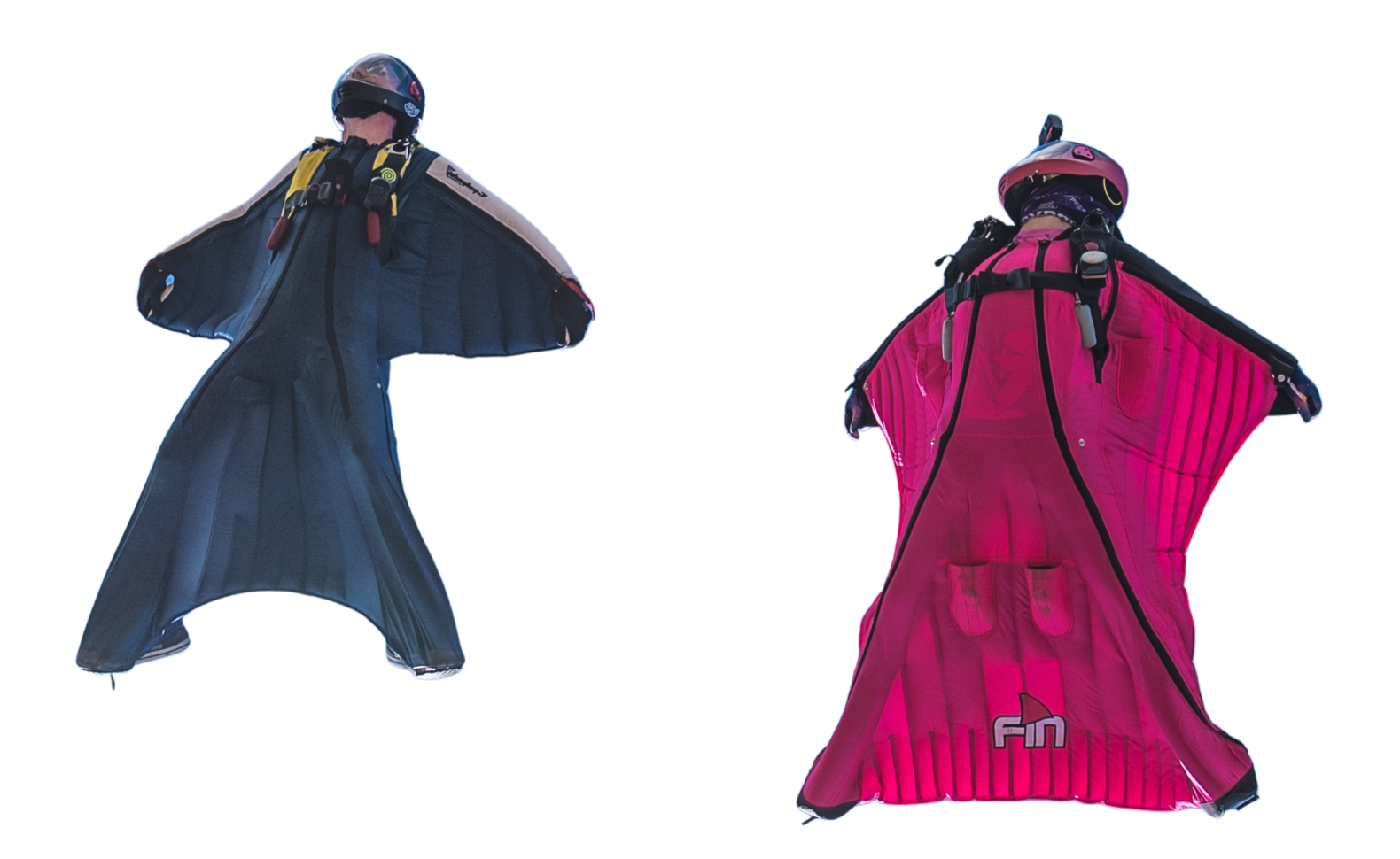
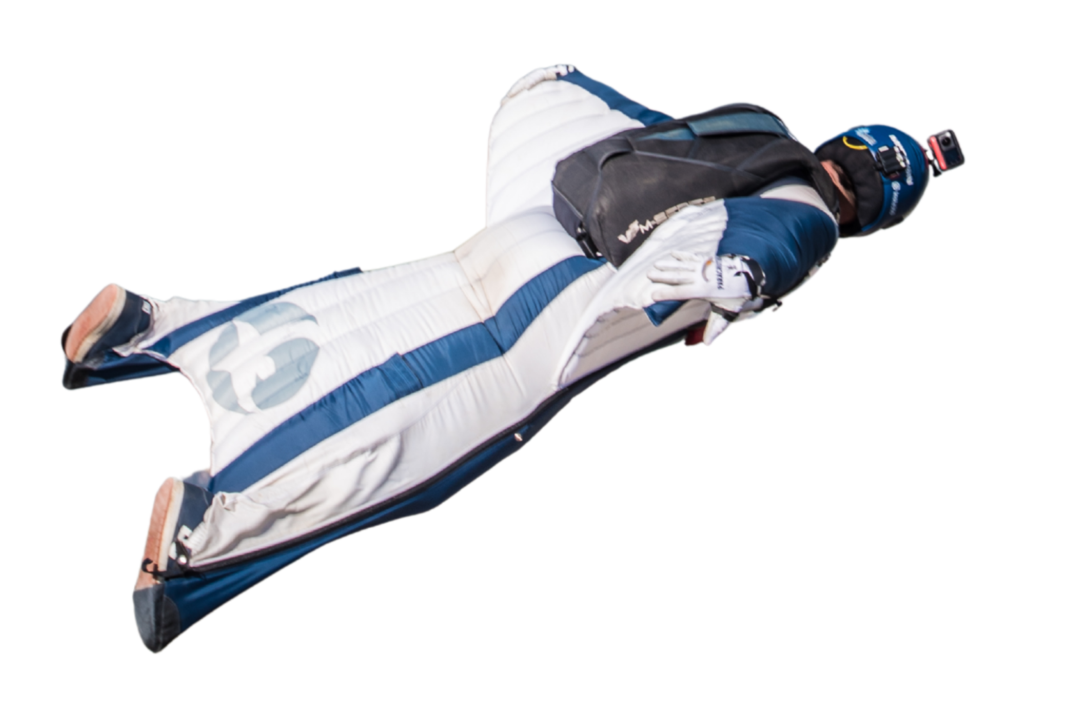
What this stage is really about?
Stage 2 is about moving beyond basic survival and into controlled, intentional wingsuit flight. The focus shifts from simply managing your own skydive to developing the awareness, discipline and range needed to fly safely with others.
Safety emphasis
The biggest change at this stage is that your inputs now affect the people around you. Good progression here is built on predictability, controlled movement, disciplined approaches and safe break-off habits, not rushing before the foundations are ready.
Key areas of development
Up and down range
Develop control over vertical movement so you can adjust level changes calmly and intentionally.
Forward and backward
Learn to manage forward drive with more precision so you can close space or slow down without losing control.
Lateral movement
Build confidence moving left and right with purpose, while staying balanced and aware.
Controlled approaches
Learn to approach other flyers on a clean line with appropriate speed, awareness and judgement.
Formation discipline
Understand how to hold your slot, respect the shape of the group and avoid reactive flying.
Recovery skills
Develop the ability to recognise instability early and return to controlled flight without panic.
Break-off awareness
Build strong habits around timing, direction, separation and deployment planning when flying with others.
What coaches are usually looking for
- Predictable movement in relation to others
- Controlled closing speed
- Good judgement on approach lines
- Stable, repeatable slot flying
- Awareness of group shape and separation
- Calm, disciplined break-offs
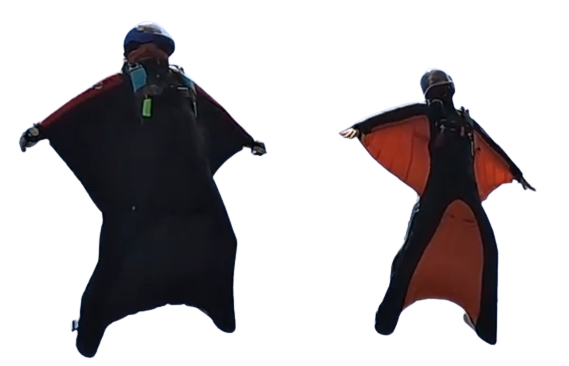
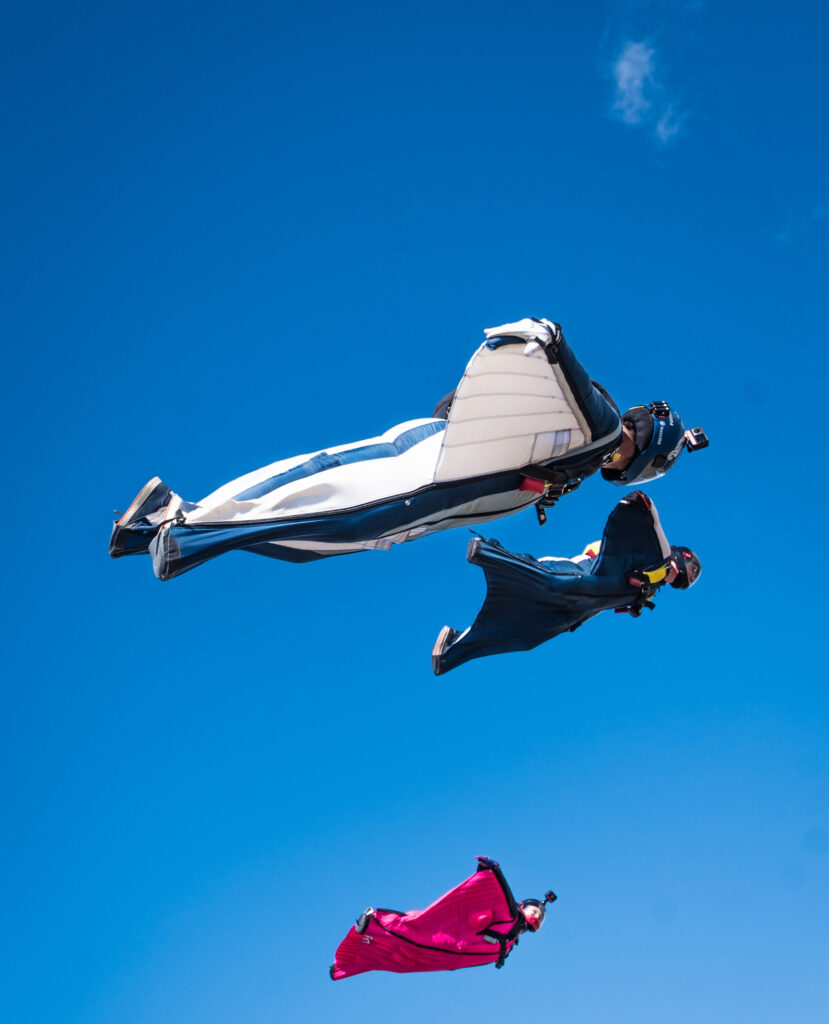
Typical training themes
01- Range drills to explore up, down and lateral movement
02 – Approach work focused on speed control and clean lines
03 – Small formation flying with clear slot responsibilities
04 – Break-off practice with strong altitude and separation awareness
05 – Debriefs focused on predictability, discipline and group safety
Signs you may be ready for the next stage
What comes next?
Stage 3 introduces more technical precision in the air, with greater focus on aerodynamic efficiency, docking, advanced exits and consistent performance within small-group flying.