
Apply advanced movement skills to more complete acrobatic flying with greater precision, control and leadership
Stage 5 is where technical movement begins to come together in a more complete acrobatic context. Building on the transitions, backflying and manoeuvre control developed in Stage 4, this stage introduces more refined acrobatic sequences, flare use, base flying and greater responsibility within technical group jumps.
This is the final core stage within the beginner suit pathway, designed to help pilots demonstrate not just skill, but control, judgement and repeatability before considering progression into a larger suit.
Stage 1
First Flight
Course
Stage 2
Essential Wingsuit
Techniques
Stage 3
Aerodynamic Wingsuit
Proficiency
Stage 4
Wingsuit Transitions
& Backflying
Stage 5
Precision Wingsuit
Acrobatics
Quick facts
- Focus: Acrobatics, flaring, base flying, leadership, precision
- Environment: 1:1 Coaching
- Typical entry point: After developing strong transitions, backflying and controlled manoeuvres in Stage 4
- Progression leads to: Suit progression or break-out pathways
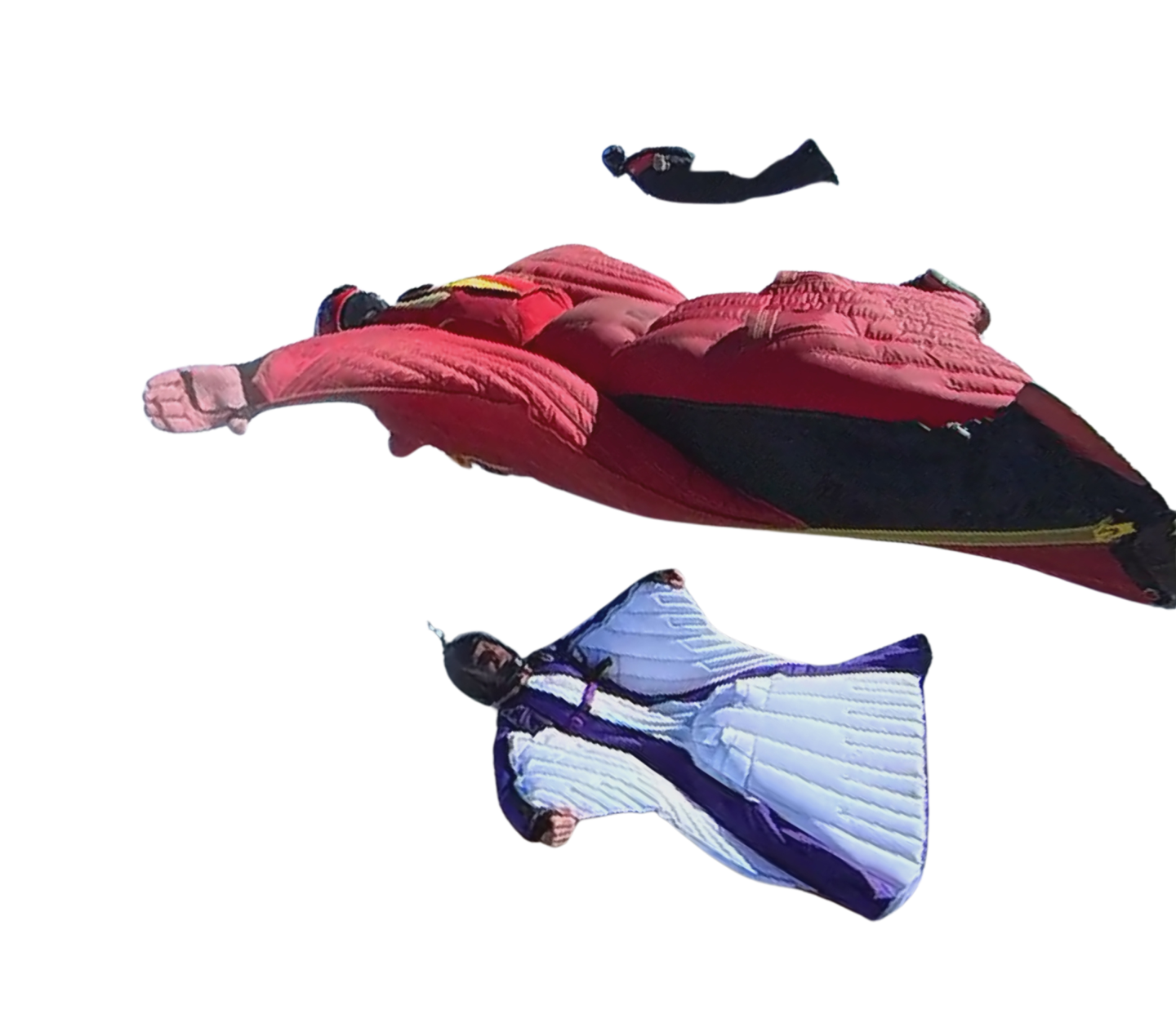
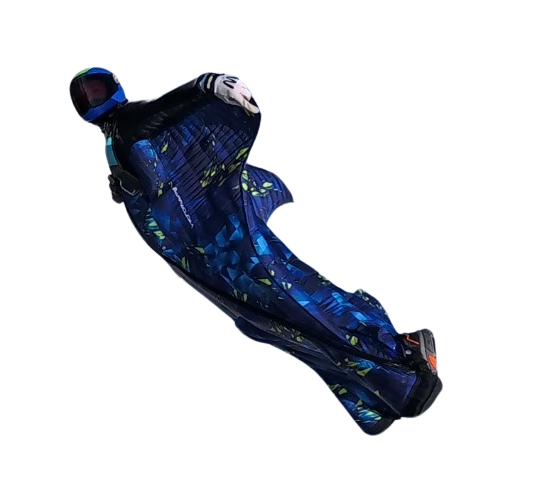
What this stage is really about?
Stage 5 is about taking advanced movement skills and applying them in a more complete, disciplined and purposeful way. It is no longer just about being able to transition or backfly well. It is about combining those skills into cleaner acrobatic flying, using flare control effectively, and showing the awareness and maturity needed to support more technical jumps.
This stage also introduces a wider sense of responsibility. Pilots begin to understand what it means to act as a stable base, support the group through better planning, and fly in a way that builds confidence rather than uncertainty in those around them.
Safety emphasis
As acrobatic complexity increases, the margin for error narrows. Good Stage 5 progression is built on smooth execution, clear break-off planning, strong altitude awareness and the discipline to prioritise safety over completing a sequence. Control and judgement matter more than trying to make the jump look impressive.
Key areas of development
Acrobatic sequences
Build the ability to link advanced movements together in a way that remains smooth, precise and controlled.
Precision manoeuvres
Refine manoeuvres from the dive pool with greater emphasis on timing, alignment and consistency.
Flare control
Develop a more deliberate understanding of suit flare dynamics to reduce forward speed while maintaining stability and awareness.
Leadership development
Begin taking greater responsibility for planning, role clarity and safety within more technical jumps.
Movement quality
Focus on flying in a way that looks and feels deliberate, rather than rushed, reactive or over-flown.
What coaches are usually looking for
- Clean, controlled acrobatic movement without unnecessary input
- Precision in manoeuvres, not just completion
- Stable and deliberate flare use
- Reliable base flying with good awareness of others
- Growing leadership in planning and group coordination
- Strong judgement when the skydive becomes more complex
- Calm, repeatable flying that remains predictable throughout the jump
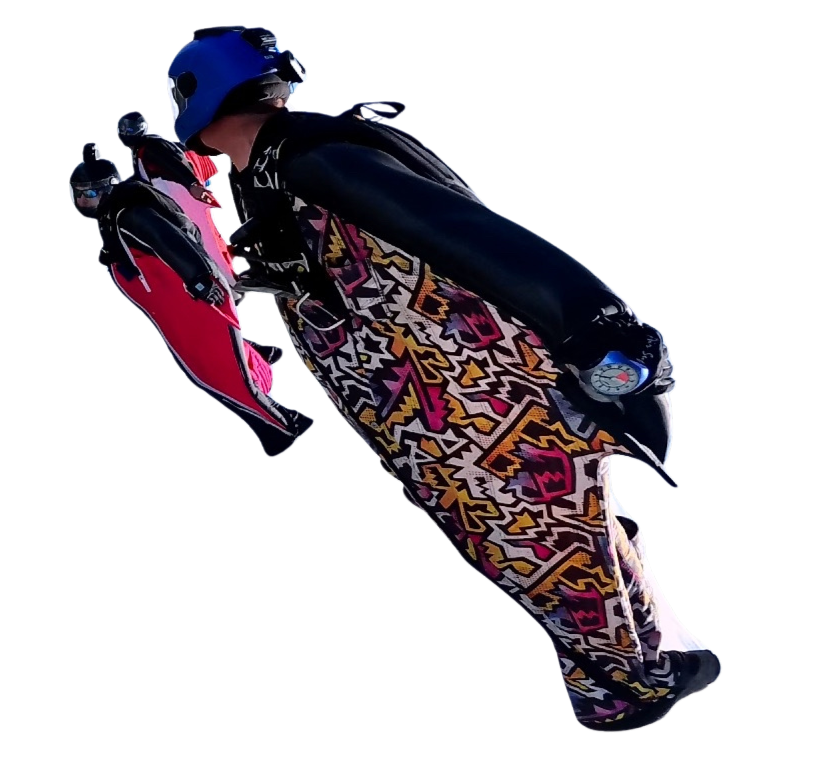
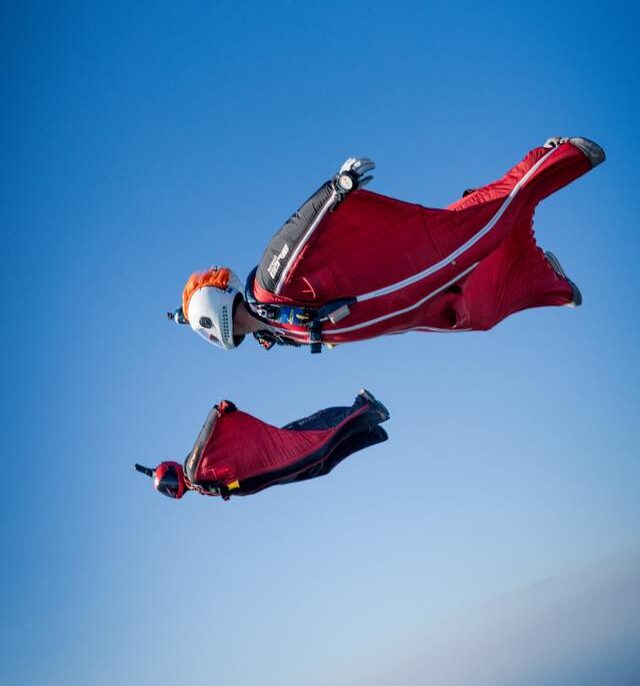
Typical training themes
01- Ground review of acrobatic sequences and movement timing
02 – Progressive work through dive-pool style manoeuvres
03 – Flare drills focused on reducing speed without losing stability
04 – Leadership exercises involving jump planning, role setting and safety management
05 – Debriefs focused on movement quality, sequencing, awareness and decision-making
Signs you may be ready for the next stage
- Your acrobatic flying is controlled, repeatable and well-managed
- You can link movements together without losing awareness or discipline
- Your flare use is deliberate and stable
- You can act as a reliable base in technical jumps
- You show maturity in planning, communication and group responsibility
- You have built the control and judgement needed to consider progression into a larger suit or a break-out pathway
What comes next?
Once Stage 5 has been completed, pilots may choose to transition to a larger or intermediate suit. If they do, the progression path starts again at Stage 3, allowing them to rebuild precision, performance and movement quality in the new suit.
For those staying within their current suit, this stage also opens the door to break-out pathways such as dynamic flying, vertical flying and other specialist disciplines.