
Build control through transitions, backflying and orientation changes with greater precision and awareness
Stage 4 marks the move into more technical wingsuit flight. The focus shifts toward transitions, backflying, backfly exits and controlled manoeuvres, helping pilots develop the movement quality, heading control and body awareness needed before progressing into more complete acrobatic flying.
Stage 1
First Flight
Course
Stage 2
Essential Wingsuit
Techniques
Stage 3
Aerodynamic Wingsuit
Proficiency
Stage 4
Wingsuit Transitions
& Backflying
Stage 5
Precision Wingsuit
Acrobatics
Quick facts
- Focus: Transitions, backflying, backfly exits, manoeuvre control
- Environment: 1:1 Coaching
- Typical entry point: After building strong precision, docking and group awareness in Stage 3
- Progression leads to: Stage 5
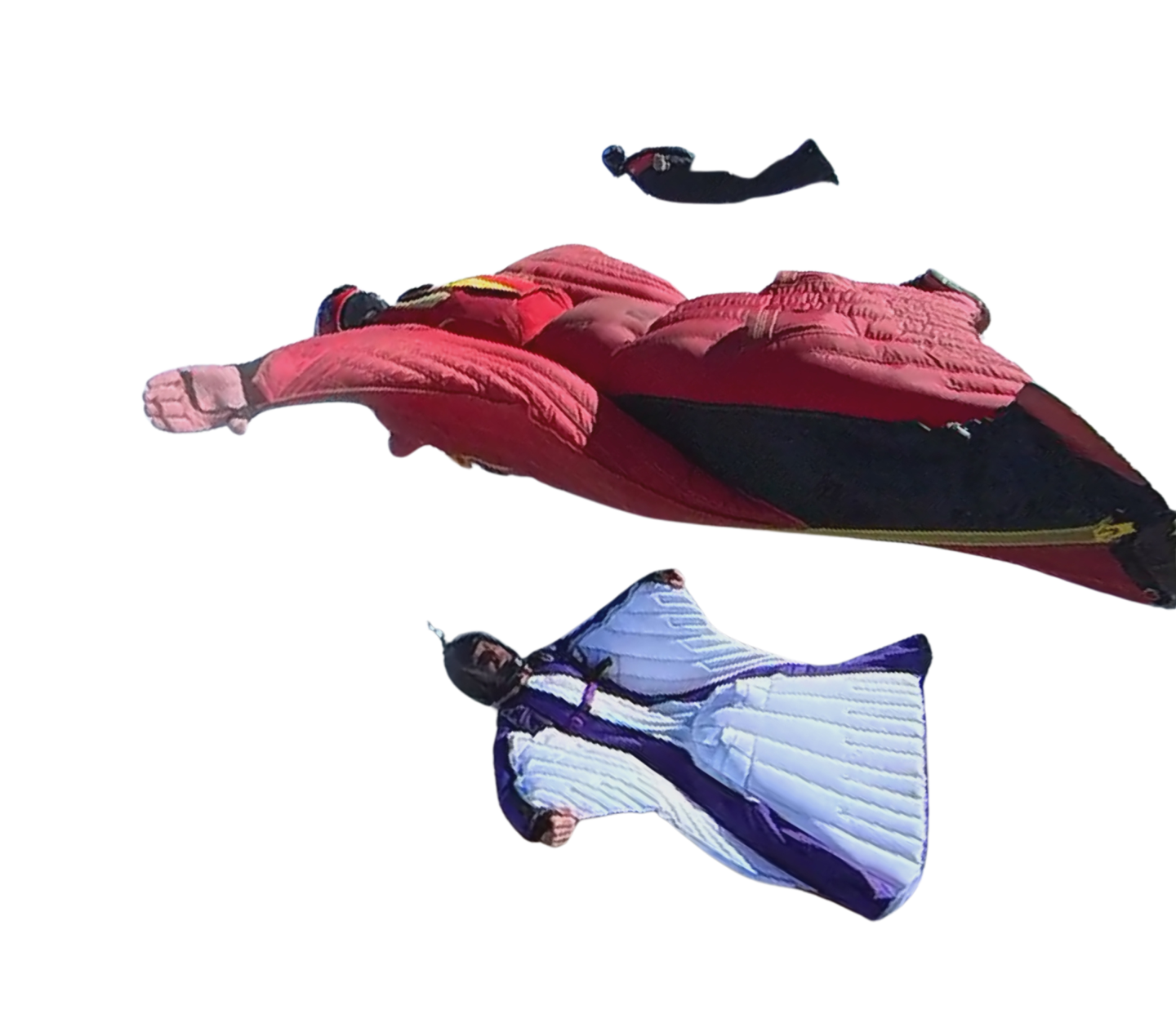
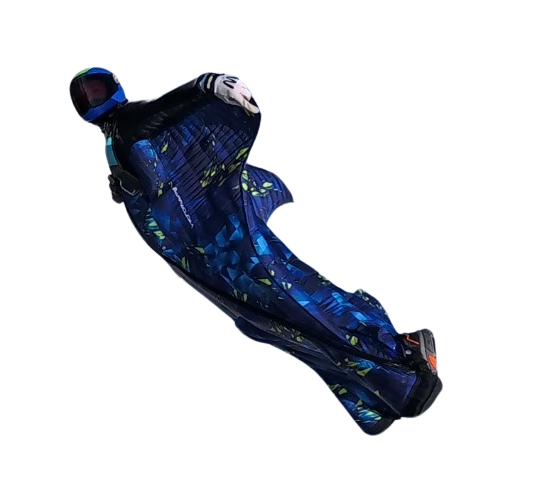
What this stage is really about?
Stage 4 is about learning to move between orientations with control rather than simply reacting in the air. It introduces the technical foundations of advanced movement: clean transitions, stable backflying, backfly exits and controlled manoeuvres that remain calm, deliberate and predictable.
The goal is not to rush acrobatics. It is to build the awareness and precision that make more advanced acrobatic flying possible later on.
Safety emphasis
As body orientation changes, so does the potential for loss of heading, awareness and control. Good Stage 4 progression is built on smooth transitions, clear airspace awareness, strong altitude discipline and the ability to stop a movement early rather than forcing it to completion.
Key areas of development
Controlled transitions
Learn to move between belly and back flying positions with clean mechanics, stable heading and awareness throughout the movement.
Stable backflying
Develop a calm, repeatable backflying position that allows you to remain stable rather than simply surviving on your back.
Backfly exits
Build confidence in leaving the aircraft on your back with control over heading, orientation and early flight stability.
Relative backflying
Learn to make controlled movements on your back in relation to the coach, including forward, backward, up and down adjustments.
Heading control
Develop the ability to maintain direction through transitions and manoeuvres without drifting or losing orientation.
Controlled manoeuvres
Begin introducing technical manoeuvres with emphasis on smooth execution, body awareness and predictable movement.
Recovery and reset
Build the discipline to recover early, reset to stable flight and prioritise control over completing the planned movement.
What coaches are usually looking for
- Smooth, deliberate transitions rather than rushed movement
- Stable and controlled backflying
- Reliable heading control during orientation changes
- Calm backfly exits with good awareness
- Predictable relative movement on the back
- Maturity to stop, recover and reset when a movement breaks down
- Consistent altitude awareness during technical flying
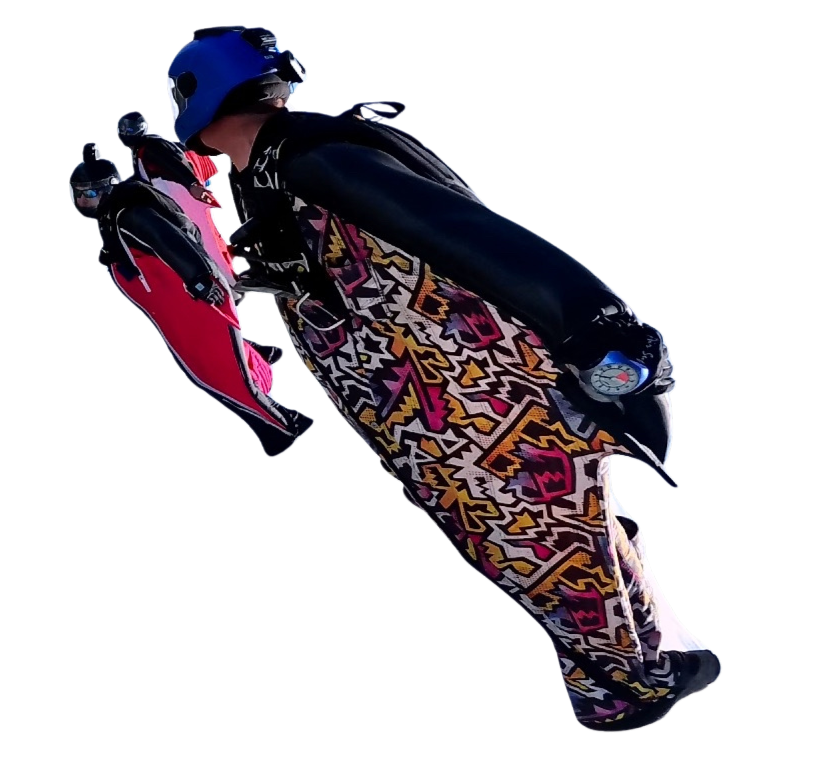
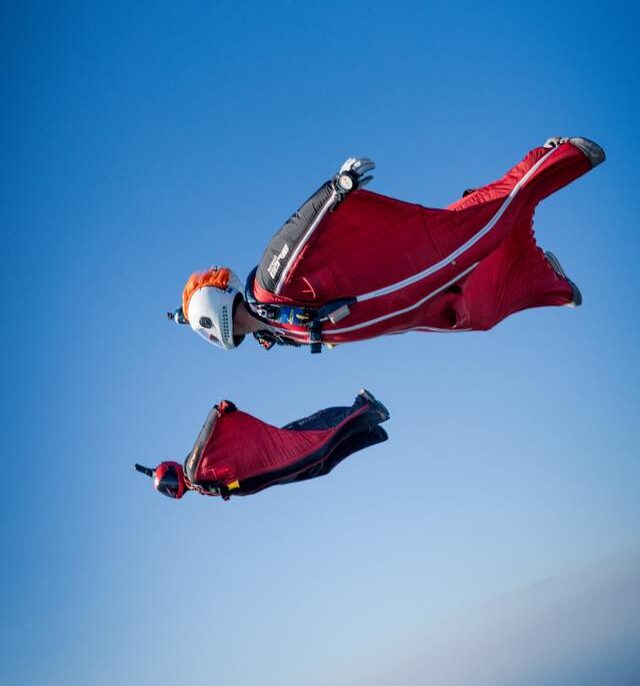
Typical training themes
01- Ground drills for transition mechanics and backflying body position
02 – Backfly exit practice with focus on heading and orientation
03 –Relative backflying drills with simple movement adjustments
04 – Controlled belly-to-back and back-to-belly transitions
05 – Simple manoeuvre work with strong emphasis on awareness and control
06 – Debriefs focused on movement quality, heading discipline and predictability
Signs you may be ready for the next stage
- Your transitions are smooth, controlled and repeatable
- You can hold a stable backflying position with confidence and awareness
- Your backfly exits are predictable and well-managed
- You maintain heading through movement without becoming rushed or reactive
- You know when to stop, recover and prioritise control over completion
- You are ready to build these movement skills into more complete acrobatic sequences
What comes next?
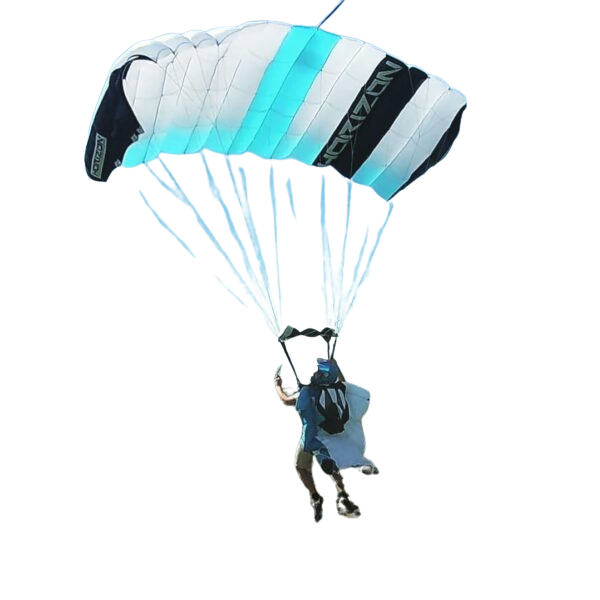
Stage 5 builds on these movement foundations by introducing more complete acrobatic flying, with focus on precision acrobatics as well as understanding the concepts of flaring, as well as leading groups.