
In this episode of Leading Edge, Sam Hardy breaks down how he turned terrain flying into a system, from analysing glide ratios to building repeatable lines through the mountains. We explore decision-making, energy management, and why slowing down, seeking mentorship, and flying with intent are what truly keep pilots progressing long term.
What you’ll hear on Leading Edge:
| 00:00 | Introduction |
| 01:12 | What Terrain Flying Really Means |
| 02:30 | Understanding Terrain Flying |
| 03:12 | The Formula: Glide Ratio as a Safety Tool |
| 06:25 | Managing Energy Through the Line |
| 08:15 | Planning Starts Before the Jump |
| 08:56 | Where Terrain Flying Goes Wrong |
| 11:13 | The Hardest Lesson: Slow Down |
| 11:48 | Thinking Long-Term in Terrain Flying |
| 13:09 | The Value of Mentorship |
Guests
A huge thanks to Sam Hardy here for joining me on the podcast:
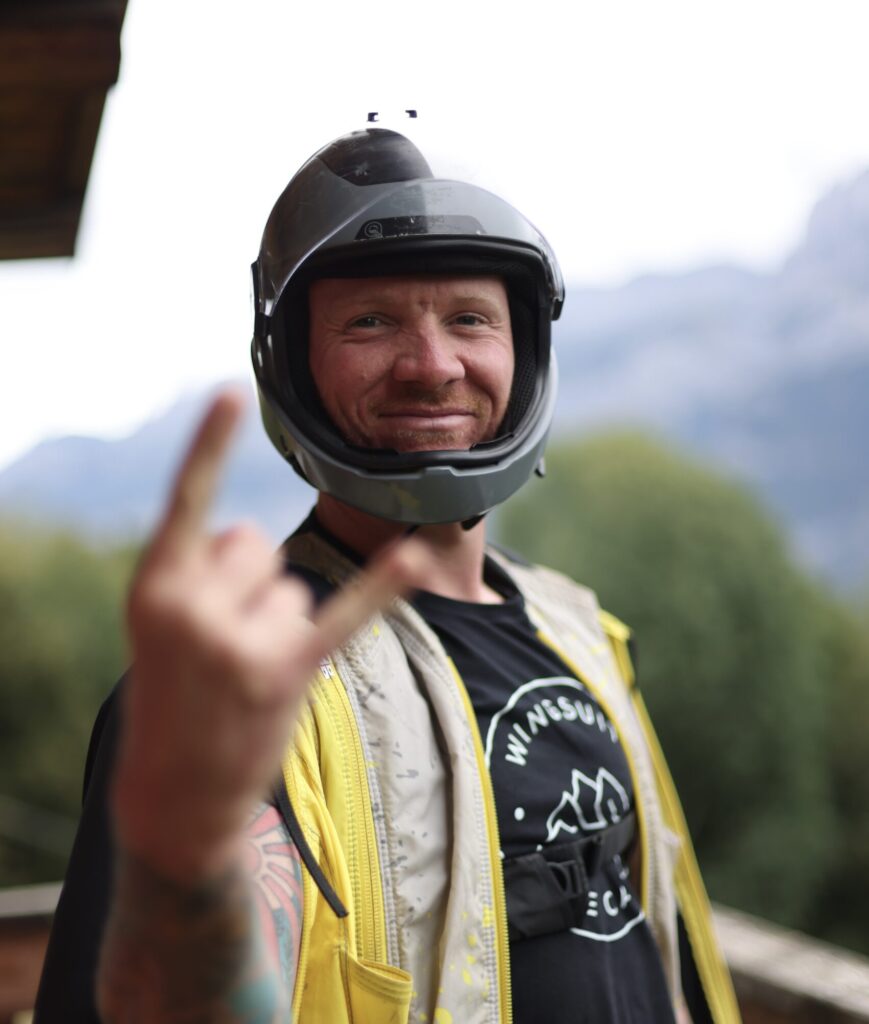
Sam Hardy
Sam Hardy was born in the United Kingdom on July 16, 1989, and for the past 15 years of life has revolved around one thing – BASE jumping! Now based in Oceanside, California, he has built my career around raising the standard in one of the most demanding sports in the world. He has completed over 4,000 skydives and more than 3,000 BASE jumps. He is the owner of Learn To BASE Jump and Wingsuit BASE Camps, where his mission is clear – to raise the educational standard of BASE jumping and reduce repeatable accidents through structured, measurable progression. Over the past decade, he has taught more than 1,000 students to BASE jump and mentored hundreds through wingsuit BASE progression.
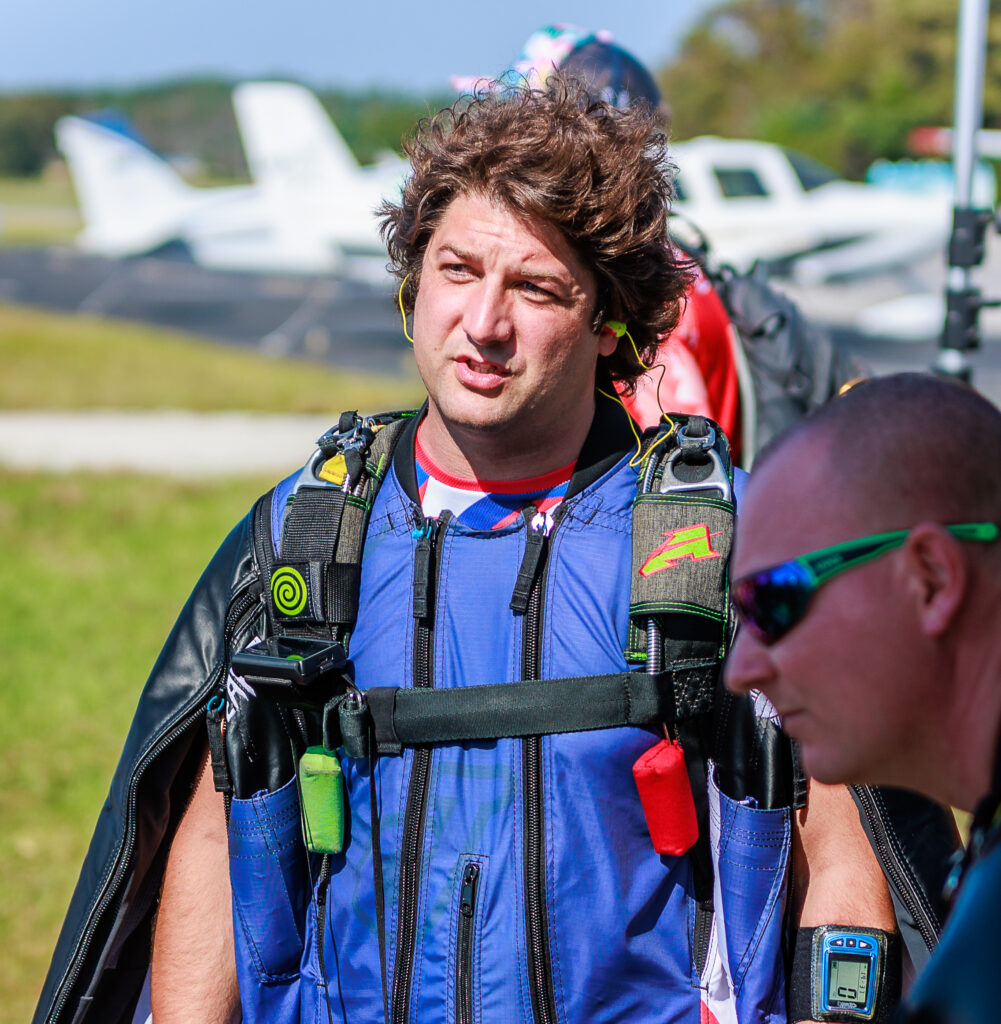
Jack Peploe
SQRL Wingsuit Coach, four-time national wingsuit acro champion, and lifelong student of the sky
Transcript
Sam Hardy (00:00)
Terrain flying is finding a really beautiful line down a mountain and being able to connect it. So there’s just this fluidity through the terrain that’s provided to us,
Jack Peploe (00:13)
Welcome to The Leading Edge, the podcast that captures the art, science and soul of wingsuiting. I’m your host, Jack Peploe. And today I’m joined by someone who has turned terrain flying from instinct into structure. Some see terrain flying as getting close to the mountain. Others see it as a risk. But for Sam Hardy, it’s about understanding, building systems, reading lines and flying with intent through the landscape. With over 15 years in Wingsuit Base, Sam has dedicated his career to raising the standard through education breaking down terrain flying into something that can be analyzed, taught and approached with consistency.
Sam Hardy (00:54)
My name is Sam Hardy. Yeah 37 this year and yeah from the United Kingdom and over the last I guess 15 16ish years now I’ve Yeah, kind of done a lot of wing suiting and a lot of base jumping
Jack Peploe (01:12)
Sam, it’s awesome to have you on. I’m sad to hear you’re 37. I thought someone was going to beat me on age, but not quite. Anyway, your life’s revolved around base jumping for sort of, think it’s 15 years and your focus now is raising the standard through education. When did terrain flying become something you really started to analyze rather than just experience?
Sam Hardy (01:32)
You know what, it was pretty much after kind of like the first kind of wingsuit jumps where I was like flying over terrain. I remember kind of going out into the big bad world of wingsuit base and going, right, how do we do this? And coming from a, you know, a pretty hardcore climbing background, I felt like I just didn’t really have any experience in the mountains flying wingsuits. So yeah, I had a couple of…close calls in my early years that kind of set, you know, like a standard of me going, you know what, I think I need to figure out like a system to this to see if I can approach it safely. And then I kind of put these ideas into practice and yeah, over the years have kind of developed them and now it’s become more of a, it’s like more of a formula to fly lines that I want to be able to do rather than just kind of winging it as such.
Jack Peploe (02:30)
So a lot of people see terrain flying as getting close to the mountain, but that sort of feels like an oversimplification. So what is terrain flying actually about?
Sam Hardy (02:39)
In short, would say that Terrain flying is really about, for me on my sort of personal level is finding a really beautiful line down a mountain and being able to connect it. So there’s just this fluidity through the terrain that’s provided to us, you know? And some days that might be quite high off of the floor and other days it might be like, you know, really low to the ground. And that just that kind of just changes depending on the, you know, what the line can offer or what the mountain can offer you.
Jack Peploe (03:12)
Do you think people are drawn to terrain flying for the right reasons?
Sam Hardy (03:15)
I mean the right reasons really is to sort of live a powerful life and to you know really experience what you can do in a wingsuit but I think that a lot of people that initially tried to get into terrain flying really you know have like a tick list or like a checklist like hey I’ve got to go out to this you know this country and try and obtain this line as such right. That’s a really really good way to do it and something to work towards but I think what we kind of commonly see and I have seen over the last 10 years of flying is just maybe people rushing slightly too much into it, ⁓ rather than having, you know, getting a good sort of ⁓ rounding of what an approach should look like to terrain flying.
Jack Peploe (04:01)
You mentioned this formula. Can you sort of explain a little bit more around that?
Sam Hardy (04:04)
So basically it came from me having a pretty close call ⁓ years ago and essentially what I was doing was I try and explain it the best I can is I came around a corner of a really, really high wingsuit jump and I was like, I’m going to fly down there. And as I was getting towards it, there was like a ridge line that I had to make it over. And, ⁓ you know, I made it over this ridge line only just, and then I was like, this is weird I like really want to like not be here right now I want to be over there so I was like I’ll just hire my glide so I can transport myself over that because I need to get out of this terrain because it’s you know coming towards me and I couldn’t do anything about it so I remember I kind of was hiring my glides and now my airspeed was lowering and the ground was coming closer I was like fuck and it just kept happening for like what felt like an eternity but was only you know 15 seconds or so I was like, that was really weird. I thought that by hiring my glide, I’d be able to kind of get out of there, but it made it way worse because I was lowering my speed. So as that happened, I had a very similar thing happen a couple of weeks later and it was bugging me that I couldn’t figure out, you know, a safe way to do this or a way that kind of would feel repeatable. And then, yeah, cut a long story short, a lot of jumps of sort of analyzing lines that I really enjoyed versus analyzing like
Jack Peploe (05:06)
Yes.
Sam Hardy (05:28)
lines that I had this kind of wheel experience on, I found out that by calculating the glide through some basic maths with Google Earth, distance, height, etc, dividing that, would give me my glide ratio. And then I found out that the lines I really enjoyed flying and that I had a lot of control over were all lines between like a 1.7 and a 2.2 glide ratio. And they kind of also then correlated to my fastest horizontal speeds with the use of a flyside and where I had those kind of sketchy experiences, those glides were way higher. So the glide ratio was kind of around the three mark. And then I kind of like put two and two together and decided from then on that if I was going to be terrain flying, would only select lines that would kind of fit in that class of flying of that one seven to two two, sometimes two five. So yeah, that’s my sort of method to the madness in some ways.
Jack Peploe (06:25)
How does a pilot manage the energy throughout a line rather than just sort of reacting moment to moment?
Sam Hardy (06:31)
I mean, obviously you can react moment to moment, but if you were to look at it as like, let’s say like a racing car driver, for example, what I started to do with all the lines, I built markers and those markers, you know, we refer to them as basically a very, very obvious feature down the line that can be seen at high speeds. And that could be like a super big rock or a very obvious dead tree, something like that that you can quickly see.
Sam Hardy (07:01)
And the way I kind of build the lines now and have done is I treat it like a dot to dot puzzle. So I start obviously at the exit point and then within the line all the way down, I’ll select markers the whole way down and each marker is kind of critical needs to be obviously lower than the previous one. Right. So what you end up doing is, you know, say on jump one, I’ll go to a new mountain range. I’ll be like, right, I’m going to fly a line. I’ve got to figure out how it works here.
I’ll exit and then I’ll start kind of scoping out where that first marker might be. So if I’m flying, you know, a little bit of a high glide over everything, I’ll be like, oh, that big tree down there looks super good. And then I sort of like imagine what the next one would look like and the next one would look like. And then really, it’s just about building a relationship with the mountain. And then, you know, lots and lots of jumps upwards, you know, 10 or 15 jumps, and then trying to put the whole puzzle together with everything working perfectly so that would be the weather conditions, the wind, the correct suit selection, how I’m feeling on the on the actual day of it. So yeah it’s kind of like building almost like an invisible flight path down the mountain.
Jack Peploe (08:15)
How early should these decisions be made in terrain flight? Are we talking like well in advance of the jump?
Sam Hardy (08:19)
From jump one, basically. Yeah, I mean, obviously these days with where we are with social media and YouTube and stuff like that, it’s pretty good to have access to a lot of terrain flights already. So you can do a lot of the homework beforehand, obviously by just watching videos. then say you’re going to a country that has never been jumped in before or maybe has limited wingsuit jumps there with the…accessibility of Google Earth, you can actually build a pretty good idea of what you’re to be capable of flying down the mountain with just something simple like that,
Jack Peploe (08:56)
Around decision making and safety, now I understand your mission is to obviously reduce repeatable accidents through structured progression. Where are people getting terrain flying wrong?
Sam Hardy (09:07)
I that’s like a really good question and it’s funny because it pricked up straight away. The hair on the back of my neck was like says one thing straight away you know and usually what we’ll see through the season is I personally believe that the most accidents come from people flying high glide over terrain.
Yeah, that’s the most common factor. It’s kind of rare to see it in any other ways. Obviously there’s lots of different ways that it could happen. Someone might slip at an exit point, which has happened in the past. But really it kind of just boils down to high glide over terrain.
Jack Peploe (09:55)
And do you feel that comes from lack of skill or just poor decision making?
Sam Hardy (09:59)
I think that a lot of times maybe when people go into the mountains, it’s like a style of flying that would be used to obtain maybe accessibility to a line or a certain way to fly. And I personally believe like we’ve just kind of been discussing, Jack, is that if you’re flying with a lower glide ratio in the mountains and you’re selecting a line that, you know, has you flying super fast at like a, you know, 2.0 the whole way down at any moment.
If you need to escape and go home or if you need to slightly increase your glide ratio to pop over a tree or avoid a feature in the mountain, you can do so. Now, if you’re doing that, you know, a way higher glide ratio, let’s say it like a three or 3.2 and now you’re in that same situation, you don’t really have much left in the suit. You can’t continue to go up. You know, we don’t have thrust, we don’t have a motor. So really the approach that’s best taken in my opinion is to be flying at a lower glide ratio than we’re capable of and then you know we can get connected to the terrain we can get down and dirty in it and then if we need to we can just increase that glide ratio dodge whatever might be in the line or use our speed to be able to get out of there
Jack Peploe (11:13)
What do you believe is the hardest concept to teach someone about terrain flying in general?
Sam Hardy (11:17)
Ways to take it slow is probably the hardest thing to teach because you know anyone who gets into this sport definitely has you know a certain screw loose and then being told to slow down is probably the advice you don’t want to hear. So yeah that’s the hard that’s the trickiest thing you know and I think that when you do get really mature students who are just fully into it and are willing to take it slow and sort of seek correct guidance then they’re the ones that just excel and just kick ass,
Jack Peploe (11:48)
Approaching terrain flying, you know, for the long term, how should they approach that?
Sam Hardy (11:53)
Think you just answered the question there it’s approaching it for the long term right like that really is it trying to see it like I guess the advice would be try to see yourself doing it in 20 years time right so it’s like you know if you don’t can’t get that jump today because you know maybe you’ve done you got a two-week trip somewhere and the weather’s just been crap and you’re like maybe you kind of push your weather limitations or whatever just leave it till next time it’s cool the cliff ain’t going anywhere
Sam Hardy (12:22)
We can easily come back and it’s trying to enjoy that side of the journey a little bit but that is fucking really hard sometimes. Much easier said than done.
Jack Peploe (12:29)
Thank if you were to give your younger self like one piece of advice before your first terrain flight, what would it be?
Sam Hardy (12:37)
To myself would be seek out more mentorship beforehand. Like I would have loved to have had more of that support and guidance getting into it because I think that really at the end of the day everyone’s really happy to share you know some information and some stories regardless of experience. yeah I wish that I wasn’t kind of scared to ask out to certain people to say hey you got any advice with this you know?
Jack Peploe (13:09)
What’s the biggest mistake that you’ve made in your career that changed how you approach it today?
Sam Hardy (13:14)
It’s funny like I know the almost the answers straight away, so I had a really gnarly experience. I don’t have many which is pretty good. I’ve had a very black and white, non-colourful sort of incidents and accidents within the sport which is really good. I obviously remain to try and keep it that way. But I was out in Africa opening some jumps up in Ethiopia years ago. In fact, it was 10 years ago. Yeah, 2006. So 10 years ago, we out there and ⁓ you know, we weren’t using any lasers or any, you know, specialized equipment. We kind of just went out there and just looked at stuff and was like, yeah, this is sick. Let’s like go down there because it’s massive. And I remember looking over the edge at this exit and being like, fuck, that is like a massive push.
Like that is a big push. I am like gonna hit that ledge down there. And we, it was really funny actually, the two guys I was with, Dario and Nathan, we were like, yeah, we’ll do a three way off it. It’ll be sick and we’ll get outside video. It’s gonna be amazing. And then we kind of like looked over the edge again and we’re all seated up. And then it was like, maybe, maybe we should just do solos. So it went from this like, we’re gonna be really extreme to actually let’s be really smart about this. And I remember Nathan went first and.
He had a big push and cleared the ledge kind of 80 meters down by, you know, a couple of feet, which is pretty close. And then ⁓ I watched him land and he tried to radio up and our radios weren’t working like at all. So I was like, well, it’s my time to go now. And I was like, Sam, you have to push as hard as you can right now. And I remember exploding off this exit. And as I pushed, I remember looking down and going, ⁓ shit, brace for impact. That’s actually what my brain said was brace for impact and I ended up tilting myself more head-low and lifting my feet up and my right foot hit the cliff at about 80 meters down. It ripped the fin off the suit, spanned me sideways and I ended up kind of, my body was trying to fly out of the gully the opposite way. And I don’t know what the hell happened or the universe was looking over me that day and I kind of just kicked into gear and ended up flying out there and was looking down at my suit and had a rip in it on the foot and
I kind of landed, was super emotional on the canopy because I hadn’t had like a failure like that before and it really upset me because I kind of, you know, really try and be as good as I can at everything. And that’s kind of always stuck with me. It’s just the mistake that I made when, you know, 10 years ago, I still remember it very vividly. And that is something that I will share with people and say, hey, look, before you go opening exits, and that can be a new exit as well. Really, really know what you’re doing, like use your tools, like make sure that you have a laser, make sure that you know as much as possible and have the correct guidance and mentorship to be able to do this.
Jack Peploe (16:10)
Shit Sam, what a way to end the episode. That is insane, absolutely insane. Well, look, thank you so much. This has been really, really fascinating. Really, really enjoyed chatting to you.
Sam Hardy (16:20)
Yeah, likewise. Thanks for having me on here. And that was extremely fast. Time slipped away from us very quickly there.
Jack Peploe (16:29)
It always does.
Jack Peploe (16:31)
Huge thanks to Sam for sharing his journey, not just the lines he’s flown, but the thinking and systems behind them. His story is a reminder that terrain flying isn’t about getting close. It’s about understanding the mountain, respecting your limits, and building a repeatable approach that keeps you coming back for years to come. If this conversation made you rethink how you approach risk, progression, or mentorship in flight, share it with a friend and follow The Leading Edge for more stories from the edge of human flight. I’m Jack Peploe, and this is The Leading Edge.