
In this episode of Leading Edge, Peter Salzmann a Red Bull athlete, shares his journey from athlete to innovator, developing electric thrust systems and wingsuit foils to push the boundaries of human flight. We explore the mindset behind innovation, balancing vision with risk, and why progress comes from questioning what’s possible, and having the courage to build it.
What you’ll hear on Leading Edge:
| 00:00 | Introduction |
| 01:58 | Athlete Meets Engineer |
| 02:20 | Bringing Aerodynamics Into Sport Science |
| 03:01 | The Birth of the Electric Fly System |
| 07:17 | The Wingsuit Foil: Flying Like a Bird |
| 09:20 | Testing Innovation Without Crossing the Line |
| 11:16 | From Vision to Prototype |
| 12:35 | Does Innovation Increase Risk? |
| 13:17 | The Future of Wingsuit Performance |
| 14:09 | The Dream: Independent, Endless Flight |
| 14:54 | Listening to Instincts and Walking Away |
Guests
A huge thanks to Peter Salzmann here for joining me on the podcast:
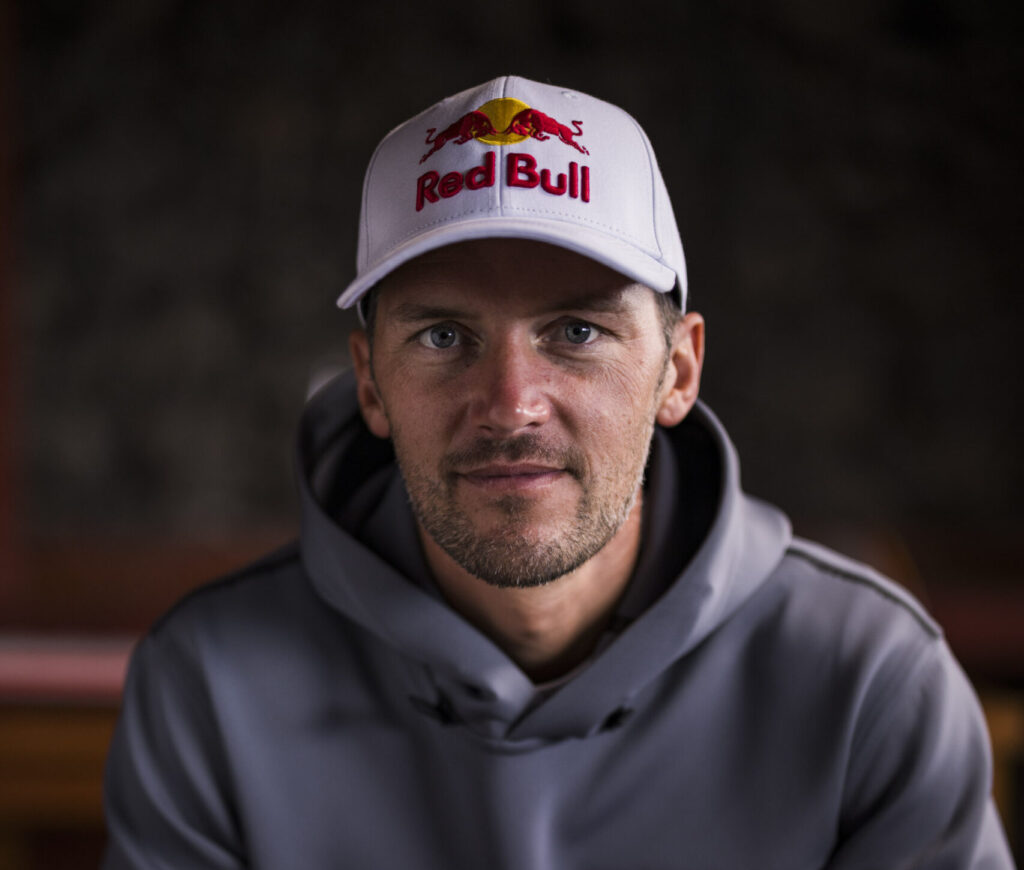
Peter Salzmann
Peter Salzmann is an Austrian skydiver, BASE jumper, wingsuit pilot, paraglider, instructor, and sports scientist. A Red Bull athlete and BMW brand ambassador, he lives in the mountains of central Austria with his wife and two sons. After starting out as a stuntman, he developed a deep passion for human flight and began combining performance with innovation, researching aerodynamics and equipment design before going on to help develop both BMW’s electric wingsuit thrust system and Red Bull’s pioneering Wingsuit Foil project. His work has played a key role in pushing the boundaries of modern wingsuit flight.
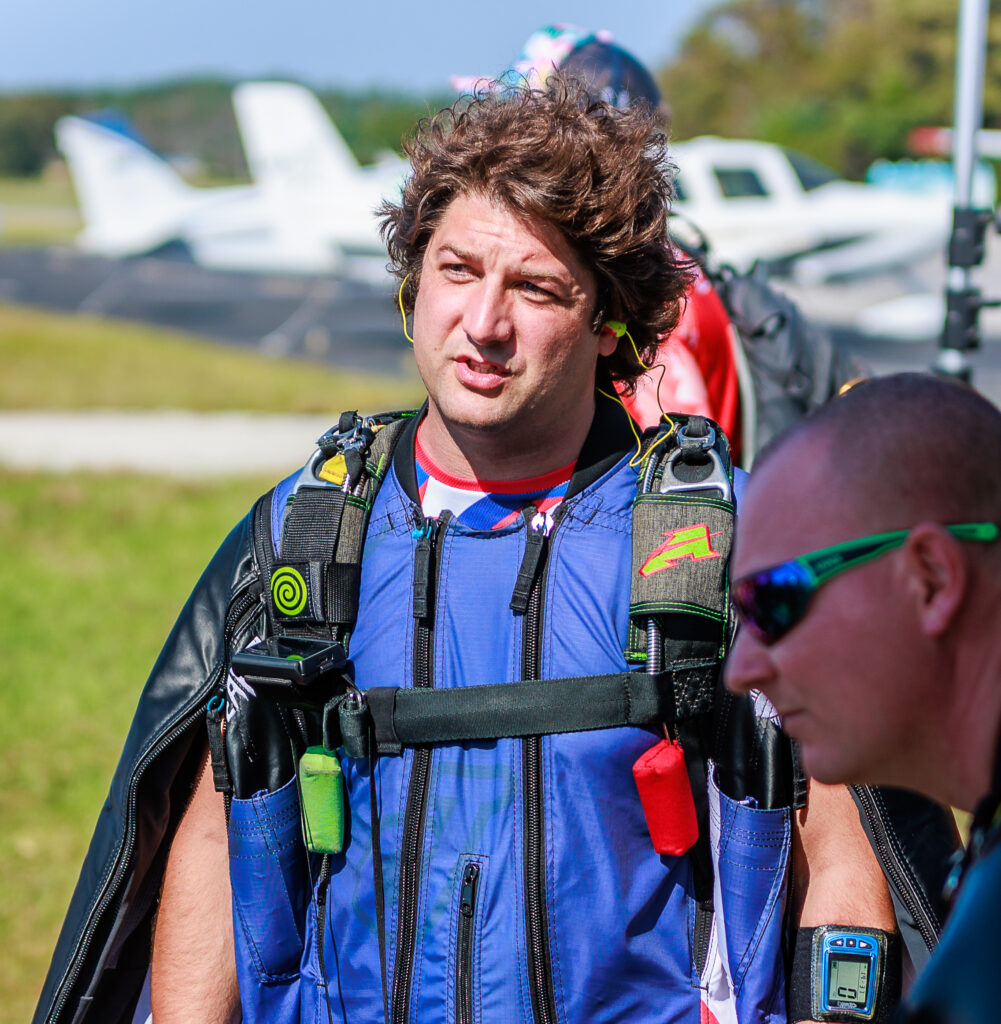
Jack Peploe
SQRL Wingsuit Coach, four-time national wingsuit acro champion, and lifelong student of the sky
Transcript
Peter (00:00)
Sometimes you have to step fear to get better, improve, but always think about how much risk is it to step over it.
Jack Peploe (00:10)
Welcome to The Leading Edge, the podcast that captures the art, science, and soul of wingsuiting. I’m your host, Jack Peploe, and today I’m joined by someone who isn’t just flying, he’s redefining what flight can become. Some pilots master the discipline, others push its limits. But for Peter Salzman, it’s about invention, turning ideas into reality and shaping the boundaries of human flight. From stuntman to wingsuit pilot, to building electric fly systems with BMW and developing wingsuit foils.
Peter lives at the intersection of athlete and engineer, constantly asking how we can fly further, longer and closer to the dream of true flight.
Peter (00:51)
Yeah, I’m Peter Salzmann from Austria I’m a wingsuit pilot, adventurer and innovator. And I’m happy to be here today to talk to you and the community.
Jack Peploe (01:02)
Amazing. Well, look, Peter, I am super excited to have you on this podcast. I have got so many questions for you, so I’m going to try and contain my excitement slightly. Now, you started as a stuntman, you became a skydiver and obviously a base jumper. You studied sports science and now you’re building flying machines. At what point did you realize that you didn’t just want to fly, but you actually want to redesign flight?
Peter (01:24)
That’s a good question. I think it was actually almost from the beginning. So every time when I have something in my hands, I’m not thinking like, yeah, that’s the tool. I’m thinking like, how can I even improve this? So whatever it was as a child, as I get my first van, as I was starting paragliding, skydiving, brings it flying and all these things. Yeah, it’s I don’t know if it’s…
I’m sure it’s a good thing as well, but also it could be way less stress if I would be happy with what I get.
Jack Peploe (01:58)
Now, do you see yourself more as an athlete or as an engineer who happens to jump off mountains?
Peter (02:04)
Good question. Half-half. I love to jump and I see myself as an athlete definitely and I love to improve my skills. But then on the other side I’m the innovator and I love to improve things and I mix everything together.
Jack Peploe (02:20)
Your early academic work analyzed aerodynamics of tracking suits, helmets, rigs. Was innovation always part of your identity?
Peter (02:23)
Definitely. It was cool because I studied sports, which actually has nothing to do with aerodynamics.
But I was so into this topic and I suggested it ⁓ to my teacher and he was like, yeah, I mean, I can’t help you too much in this topic, but I’m happy to give you the chance to do it in cooperation with another university who are doing aerodynamics and who have a wind tunnel. And that’s why, like even in the sports ⁓ university, I was able to do like aerodynamic study.
Jack Peploe (03:01)
Now I want to jump into the electric fly unit, your BMW, I think it was the IX3 project. Now the idea of an electric thrust system for a wingsuit sounds insane on paper. Where did that idea come from?
Peter (03:02)
Good question. It’s like a long time actually ago. ⁓ Me and my friend, we were like in a bar sitting and drinking a beer after some jumps and we were like, what could we do like to even further improve this and that and it was with Andy, Andy from Pressurized. He’s working with me like since a long time and he was teaching me bass jumping and now he’s building the foil and he was part of the electric project. And then we just said like, yeah, the system would be nice and we’re not electric and then we kind of were thinking of building it at our own but yeah it costs a lot of money and so we were trying to sell the idea and ⁓ then it was pretty complicated path towards BMW like through some corners but then I got there and yeah they were happy with the idea it was the right idea in the right moment I just wanted to improve flying, improve the
Jack Peploe (04:18)
What did you do to get BMW to take this project seriously?
Peter (04:22)
I was lucky and I had the endurance to like over and over. do some meetings and to, to, think the trust is the big key. So they need to have the trust in you and that you have the responsibility to do like such a big, and actually dangerous and quite risky project, ⁓ with a brand, like this. And I think like there were quite a lot of people telling me, Peter, come on, give up.
It won’t happen. And I was like, never. I have this feeling. And I think it was almost one year of doing meetings and just always talk to next people, next people, next stage. Yeah, till they said like, OK, ⁓ let’s do it.
Jack Peploe (05:12)
What was the biggest technical obstacle in turning thrust into controllable stable flight?
Peter (05:17)
Mean the first thing was to have something mounted on the belly was actually something new.
So we also had the idea at the beginning to have the thrust system on the back. then we need, we talked to some people and we did the calculations, et cetera. And then we were like, actually this is, it just makes it super complicated because we have the parachute on the back. Then you destroy the area of creating lift with the wingsuit. ⁓ This part. And then you’re always like in the shade of the wingsuit with the engine. And that’s why we said, let’s do it on the belly. But as I had no idea how this would work,
We built actually like a raw prototype, just like an aluminium construction. I put it on my belly, like a really big one, and jumped out of the helicopter with my friend Scotty. And I realized I actually can fly in a normal way. And because we realized this, we said like, okay, next step, we put engines in. And then I was flying in the tunnel before.
We tested in the horizontal tunnel with BMW and then we did the first test real jumping, jumping wise. But yeah, I mean, the challenge was to accept that we actually don’t get so much thrust out of it to do level flight and to find like the balance in between this is too heavy and I destroy my body, my neck, my back. or it’s so less thrust that I don’t get too much performance out of it. So to find this compromise, because we had this big engine always in mind and we even did some tests, but it was so heavy and it was a little bit more performance, but it was still not level flight. And then in the end, I accepted to take the smaller ones, to like the 128 millimeter ones to actually just improve the performance and almost double the performance but not much more. But I was still able to fly in a nice and almost normal way.
Jack Peploe (07:17)
So I want to move on to the more recent project that you’ve been working on, the wingsuit foil, which is nuts. Now, fix wings on a wingsuit. That’s obviously another step change. What problem were you trying to solve with the wingsuit foil?
Peter (07:30)
I would say not a problem. It’s more like, yeah, I wanted to further improve the performance and to fly for longer.
Like to get closer to flying like a bird. This was actually the main idea of it. And I started with it to further improve the electric engine. And before we want to put like on the sides, like additional wings. But then we said like, no, first we should build like just a wing and see if it improves anything. And then we see how to continue. But then even the first prototype, which was super small, was working really well and it was so much fun. And that’s why we started got bigger, bigger, and now I have like a one wing is for best glide, one wing is for for soaring, one wing is for playing around so it’s already like so many directions and it’s it’s hard to like find the right path because there’s so much going on at the how different is designing a passive aerodynamic solution compared to power
Jack Peploe (08:29)
How different is designing a passive aerodynamic solution compared to power thrust?
Peter (08:34)
I mean cool thing is it’s light and there is like no risk of fire so you don’t have like that much like power close to your body where you know like it could happen like if you have any problems like it could just like get into fire. ⁓ So I actually, yeah, I really like the foil project because it’s light. I can carry it up a mountain. Like I even went on a via ferrata with it and you can work on so many things like different profiles, different wingspans. it’s so cool. And you can already like use so much knowledge from, from steerable planes ⁓ and from, from other, yeah, from, from airplanes. Et cetera.
Jack Peploe (09:20)
How did you test something like that without crossing unacceptable risk boundaries?
Peter (09:24)
I think again, it was good to have the wind tunnel. So for me, like ⁓ I was so often in Stockholm, like testing things and I was feeling so good inside that, tunnel. And when I realized I can fly it well in the tunnel with like this little room of movements, then I’m fine to test it outside as well.
I tested it from the helicopter first and then later as a base jump. And for sure we had our ups and downs, like actually many ups and also many downs. So like we had wings which didn’t work. So they were like stalling so easily. then like there were like quite many challenges, but even if it’s stalling and that’s the cool thing with the project, you can still fly your wingsuit. Because if the wing is stalling, then you get again, ⁓
You create the whole lift again with your wingsuit and the wing is just like additional drag but it’s not gonna affect you and just like roll it to the side or the whole system stalls and when I realized this I was happy to like make the wing bigger bigger bigger and find out what’s still tolerated because in one case then if the wing is so big ⁓ that I that the wing is, how you say it, like if the wing is then producing more lift than I’m doing with the wing suit, the relationship is different then, then on one case I cannot steer anymore and I’m just working towards this to find it out because I want to fly my wing suit and I want to fly in a normal way.
I don’t want to get a hang glider, I don’t want to get a plane, I want to fly wingsuit. I just have this additional wing which gives me so much more opportunities. But I still love wingsuit flying so much so I’m not going to change this.
Jack Peploe (11:11)
That’s so cool. When you come up with a new idea, what’s the first filter that you apply? it feasibility, safety, funding, physics?
Peter (11:22)
I mean, you have to think about everything, but I think the first idea is really just like a dream. It’s like a vision. Like, I want to fly like a bird as an example. And then you work on things. You just throw like all ideas in the room. Like, how could that be possible?
Could it be a fixed wing? Could it be this? Could it be that? Could I use like ⁓ metrological conditions? And so everything together. And so first of all, I want to have like a vision of what I want to do. And then next step is like, how can I make this, how can I make a prototype to just being able to test it? So I don’t want to waste like months of time. And then I find out it’s not going to work. So I want to test as quickly as possible, something close to my vision.
And then you see if this is going to be the right path and then you make the next prototype and you work towards it. And for sure then it’s as well about ⁓ risk reducing. But for the wind tunnel, when I’m able to be safe with ropes and this and that, then risk is, let’s say a little bit on the side. But if it then comes to helicopter tests or base jumps, then this is a main focus, definitely.
Jack Peploe (12:29)
Does innovation increase risk or does it just shift it?
Peter (12:35)
In this case ⁓ it’s definitely not reducing risks. So the wingsuit foil doesn’t make wingsuit flying safer.
And ⁓ this is also why I’m not saying like, yeah guys, come on, I’m sharing the wing now. You can try, you can try, you can try. Because I know it’s just, it’s something additionally to the normal risk of wingsuit based jumping or wingsuit skydiving, whatever. So yeah, it’s just shifting and I mean, we’re working on things to make also this safer. But in the end for now.
It’s not gonna make it easier and
Jack Peploe (13:17)
With regards to the future of human flight, are we close to the ceiling of wingsuit performance or are we just literally scratching the surface?
Peter (13:24)
There is so much potential in all the things and now with the new wind tunnel in Slovenia where we have the glide ratio of 4.0 we can really work on the suits itself as well. And you see at the PPC suits with all these additional winglets etc. I think now we can really fine tune everything and get everything out of it.
For sure it’s going to be like then always like a different category as well, some experimental flying. But in this category I think there’s so much potential for stuff. And also on the safety side of things or to clean up the wingsuit like nicely like on all surfaces it’s super nice tool what we have now with the wind tunnel.
Jack Peploe (14:09)
What frontier in human flight excites you the most right now?
Peter (14:12)
Independent flying, like base jumping, I don’t need anything, I just hike up a mountain, fly down, but then I want to fly as long as possible.
So let’s say like I do a lot of paragliding as well and with paragliding you can fly for hours. It’s awesome. But then wingsuit flying is so nice. It’s so nice feeling to fly. And if I would be able to mix this now to do wingsuit flying but able to fly longer and just use some thermals and get to the next ridge, fly some proximity down, use whatever reason to get back up again. Like that would be like the best dream, the awesome vision like for the future.
Jack Peploe (14:54)
What’s the biggest mistake in your flying or development career that sort of reshaped how you approach innovation?
Peter (14:54)
I mean, if I think about everything else, I think I didn’t listen to my gut feeling. did listen to my feeling when I was young, when I started. I started with 20 and I was just full on all the time doing arrows, doing this and that. ⁓ My body always said, no, no, no, don’t do it, don’t do it. But I was pushing over it and had quite ⁓ many sketchy situations in my first years in my career. I think ⁓ if somebody asks me, then I would say if you start wings it flying, accept your feelings more sure Sometimes you have to step over your fear to get better, improve, but always think about how much risk is it to step over it. So I think this is my general approach of what I would change. And innovation wise, yeah, no, actually it’s, I don’t really think about something now. I think I had one idea.
I had some ideas that really worked out and I had one idea which didn’t work and I was happy that when I was in this situation to really like stopped and said like, okay, not every vision you have in your head, it’s going to be like successful. So there are some paths where you’re really like, you go that path and then you find out, maybe it’s not the right one. And you have to see that because I mean, on the Electro-Feldwings and on the foil project, like also people thought I’m on the wrong path, but I had the feeling it’s the right path. So if you’re then in a situation where somebody says, no, it’s the right path, but you have the feeling it’s not the right path, like how to decide then, but this is tricky, and everybody has to find his own way. But I had one situation where I then said, no, it’s not the right path. It’s too risky. It’s like, forget it. And I was happy that I did this
Jack Peploe (16:53)
Well, look, Peter, it’s been such a fun episode. I’ve got like a hundred more questions for you, so I’m going to have to get you on another time, but I really cannot wait for you to make your dream a reality. It sounds amazing, but ⁓ thank you so much for coming on. really appreciate it.
Peter (17:07)
Thank you so much. Thank you. Awesome work.
Jack Peploe (17:11)
Thanks to Peter for sharing his journey, not just the flights, but the vision and innovation driving them forward. His stories are reminder that progress in flight doesn’t come from mastering what exists. It comes from questioning it, re-imagining it, and having the courage to build what doesn’t yet exist. If this conversation inspired you to think bigger about what’s possible in human flight, share it with a friend and follow The Leading Edge for more stories from the edge of human flight. I’m Jack Peploe, and this is The Leading Edge.