
In this episode of Leading Edge, Luke shares how discipline, data, and structured training shape elite performance flying. From analysing every jump to building systems for consistency, we explore why “practice makes permanent,” how to turn data into action, and what it really takes to stay calm and perform when it matters most.
What you’ll hear on Leading Edge:
| 00:00 | Introduction |
| 00:40 | Engineering Flight: From Bodybuilding to Wingsuiting |
| 04:08 | Calm Under Pressure |
| 05:37 | The Worlds Mistake: Losing a Championship in One Jump |
| 08:05 | System Checks, Distraction, and Being “Too Relaxed” |
| 09:58 | Inside the Data: Reverse Engineering Performance |
| 13:06 | Turning Data Into Action |
| 15:30 | Learning From Mistakes Without Overreacting |
Guests
A huge thanks to Luke Rogers here for joining me on the podcast:

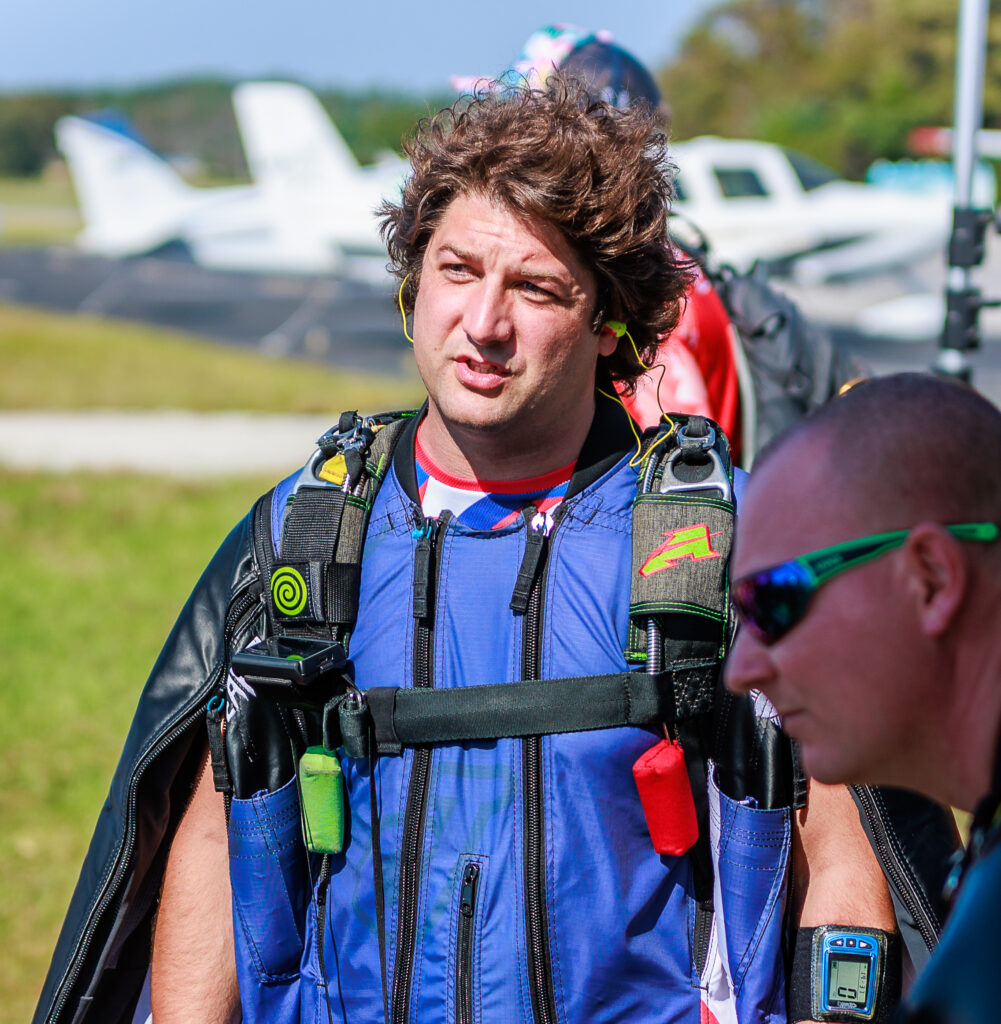
Luke Rogers
Started skydiving in 2014 after leaving professional bodybuilding behind, then quickly developed a passion for wingsuit performance through data-driven training and competition. Since then, he has become one of Australia’s top wingsuit pilots, winning multiple national titles, earning international podiums, and holding the #1 FAI world ranking in Wingsuit Performance Flying from 2024 to 2026. He now works with Squirrel Wingsuits, coaching, competing, and flying full time.
Jack Peploe
SQRL Wingsuit Coach, four-time national wingsuit acro champion, and lifelong student of the sky
Transcript
Luke Rogers (00:00)
Practice doesn’t make perfect. Practice makes permanent. If you practice the wrong thing in your practice runs that’s going to carry on to world championships, and you’re not going to do well, try different things. be locked in your ways
Jack Peploe (00:14)
Welcome to The Leading Edge, the podcast that captures the art, science, and soul of wingsuiting. I’m your host, Jack Peploe, and today I’m joined by someone who has turned performance flying into a system. Some chase raw talent, others chase instinct. But for Luke Rogers, it’s about engineering, applying discipline, data, and relentless training to squeeze every last percent from human flight.
Luke Rogers (00:40)
Name’s Luke Rogers. I’m from Australia. I’m a wingsuit performance competitor and I’ve been competing since around about 2015, 2016.
Jack Peploe (00:50)
Luke, it’s awesome to have you on the leading edge. Now I want to sort of wind back a bit because I understand that you’ve come from a professional bodybuilding background. Now that’s obviously a sport built around structured training cycles, measurements and discipline. When you entered wingsuiting, did you immediately see it as something that could be engineered maybe in the same way?
Luke Rogers (01:08)
Yeah, I did because I was actually using those systems earlier than I actually started wingsuiting. was when I started in the tracking suits. Chris Burns, he was the one that was at my drop zone and he was in a tracking suit and he was always going back to his computer looking at some data and I was wondering, what are you doing, mate? He’s like, well, there’s no one to jump with.
So I’m just trying to improve my glide by changing my body and listening to the glide in flight in real time. And then he was analyzing the data and I was like, well, I can, I can definitely make a system to make this ⁓ more efficient really. And then, and then on top of that, the, the aspect of shaping your body to maximize this strength in those configurations was another, another advantage that I had and I could design training regimes around strengthening in the, the tracking suit days. But as soon as I went to wingsuit that pretty much just expanded exponentially. So I knew exactly what muscle groups and how we were using them and what timeframe. So I knew exactly how to schedule my workouts and stuff like that around just optimizing my body for wingsuiting. And I think I lost 15 kilos of muscle. Because I started, I was obviously bodybuilding, so I lost 15 kilos of muscle ⁓ trying to figure out my actual wing loading for the wingsuit. Because I was thinking of it more like a glider than anything and like a wing and I’m thinking, well, I need a certain muscle mass and I need a certain amount of strength, but how do I distribute that muscle and which one’s the key? And then I just started playing with my muscle groups and making certain areas smaller, certain areas bigger, and just shaping my body into what I get kind of today. And that’s been over an eight year intensive training, and it’s sort of just coming together. And I’m like, man, I’m nearly approaching my mid-40s here. How long have I got? And I’ve just peaked. You know what I mean? It’s it’s taken me this long.
Yeah, I, I certainly did adapt everything that I learned from bodybuilding over. ⁓ I think it is very important for your wingsuit training, especially the amount of solos that we do. You have to be so disciplined. Like I think I’ve done over 3000 solos, ⁓ alone. So that’s, ⁓ yeah, 3000 solos in a, in a race suit is a, is a lot. And not only that I. don’t even feel like I’m anywhere near what I could be either. Like it feels like I can push things a lot further. ⁓ Especially with these newer wing suits, I’m finding like the more I’m pushing myself in my training, the more strength I’m getting, but I’m having to even get even stricter again because I can’t put on too much weight. Otherwise, ⁓ like you know, we got the time sector, then we got a distance sector, then we got a speed sector. Being heavy is great for speed. Distance, it’s okay, but time, being heavier, I’m ⁓ only 172 centimeters tall. I’m just taller than a midget. So being heavy does not help me in a time category where we’re trying to be as floaty as possible.
It’s tough. yeah, I certainly, I took everything, all the discipline that I took from bodybuilding and I’ve certainly just converted all of that knowledge and skill into, and yeah, and just put it straight back into wingsuiting and it’s helped me a lot. Especially the, yeah, it’s, you know, like you gotta be very, very disciplined. And not only that, like even within your flying, I mean, stepping on a stage in little jocks, all tanned up, looking like a cook-chook. You know, you’ve got to be composed at the same time and your mom’s in the background looking at you, you’re like, man, come on, stop looking at me, I gotta do this thing, I gotta show off my muscles. And it sort of, brought, I took that into competition, not the jocks and the tan.
But I took that whole mindset into competition. That’s why I think one of the best things that I have is being super calm in competition. When I’m on my way up in the plane, I’m super calm because I’ve done it a million times before. I know what I’m doing. There’s no pressure for me to perform because I’ve done all these training jumps beforehand. That’s where the real work gets done. putting that training into practice and that’s it. That’s all you can do people that stress out about the competition and stuff, that’s just the lack of training. honestly, if it’s to me, they just, that just doesn’t seem prepared because no matter what, if you screw it up, like I did in the last worlds, ⁓ I, in the last world, I, I, I have this little indicator that helps me find my lane and I flew, I flew in the first lane.
So my indicator was set into the first lane and then the second round, I forgot to switch it to the second lane. So I flew to the first line and got a zero for that score pretty much because I just crossed lanes and everything. And I still managed to get fourth overall from dead last to fourth because I could just put that behind me. was like, ⁓ man, you idiot. Like I wasn’t stressed out about like, soon as I got down, I’ll just put my parachute on the ground. was like, I lost it guys. That’s it.
That’s it, I just lost the world championship. And I think it was the second jump. I think it was the second jump of the meet. So it was just, it one of those hilarious things and everyone’s like, ah, it’s okay, man. Like, you know, just, and I was like, oh, well, here we go. But the ability to just shut that off and turn that away and go, ah, it’s just one jump, you know, and then come back and I was only a few points behind third. I still nearly podiumed overall, which is, it’s kind of unheard of if you come and from a zero to get that high again. It’s just, especially these days, everyone’s so close. It comes down to who makes that, who makes the mistake. That’s all it comes down to these days. And I proved that I’m living, I’m living proof of that.
Jack Peploe (08:05)
What did that teach you about assumptions and system checks? Is there anything that you’ve changed moving forwards to make sure that you, you know, you don’t make that mistake again?
Luke Rogers (08:13)
Yeah, just make sure your lane indicators check. No, the thing is what happened was I got distracted halfway through those checks, you know, so, and that’s what it was. to me, I’ve never made such a silly mistake in a competition before. So I was just too relaxed. That’s all it was. I was just too relaxed, having fun with the guys, having fun with like not just my team members, but everyone from the other countries and stuff too. Like we were just like we were bantering, having some back and forward. So in the next comps, it’s just like, okay, I’ve got to have a little less fun to make sure I’m going to be on top again. I mean, that’s all it was. Like I do have very specific systems that I go through. And I think, I think I just opened up my lane indicator and double checked it, but I didn’t actually change, didn’t change some very small figures in there that changes the lane. But I had everything open and because it was open, I was like, okay, I’ve done that check. I’ll go to the next one. It’s just like putting your D bag down, go on having a chat and forgetting to cock your pilot shoot. That’s the kind of thing that happened. And to me, like I said, that’s just me learning not to be so relaxed in competitions. So, because I genuinely enjoy myself there.
Most of time, I know there’s always some drama going on in the competition, making everyone excited and juicy. And sometimes I go over and poke the bear and other teams just to psych them out a little bit. You know, it’s just like, go poke the bear so everyone’s all thinking about something else. But you’re just like, ⁓ let it happen.
Jack Peploe (09:59)
So going back to the days, you mentioned Chris Burns, who obviously introduced you to the data side, which is really cool. When you finish a jump, what’s the first thing you look at in your data and why?
Luke Rogers (10:09)
Okay, so the first thing I do is I load the data in, then I’ll have a look at the first thing I like to do. If I’m practicing, ⁓ like let’s say I’m gonna do a distance run. ⁓ I adjust for the winds. So if there’s like a 10 kilometer hour wind behind me, I’ll fly around about 10 kilometers an hour faster. But by doing that, I can kind of calculate ⁓ what my expected results are gonna be, right?
So as soon as I land, I’ll chuck my fly side on. I’ll know after I’ve done the jump whether I’ve done a good job or not, just through the energy management and the feel of the suit. ⁓ And I’ll just come down, load it up, and just check to see if I was right. And if I’ve gone above and beyond what I thought, that’s when I’ll start crunching the numbers and saying, OK, what have I done good here? What have I done different, at the start of the run, did I do differently to another track? In the middle, I’ll have a look at ⁓ my overall glide and how I was distributing my energy. And then I’ll have a look at how I finished the run. And same goes if I did a shit job. ⁓ Sometimes you cannot always go perfectly downwind. You’ll go crosswind and everything. So I think it’s important to train those conditions as well when you get the chance.
So if jump run is like north, go around, ⁓ you can fly and do your north, but if it’s kind of northeast, just let that happen and fly and fly south. And by doing that, when you get down, you can go check these data points, you know? So I just check, is my ⁓ predicted score bigger or smaller and why? then I’ll, and that’s the first thing that I check and then I’ll check other things like my horizontal speed, the wind correction, my vertical speed, just things like that. ⁓ And I’ll also check the weather, different layers, ⁓ where the wind was coming from, how strong in those directions and how that affects my flight. Because sometimes you get wind shear. Winds at the top are going this way, winds at the bottom going this way. And it’s like, how do you prepare for that, you kind of got to fly to the top zone and then feel that change and then kind of adjust it to the bottom zone. So you’re not going to get best of both worlds. You’ve got to find that happy medium. And the way to do that is to check your data. And it’s like, okay, you figure those things out by going down and going, why was my score so crap? I tried so hard and then the energy died. Why did it die? And then you figure those things out. Just reverse engineering basically.
Jack Peploe (13:06)
So how do you stop the data from becoming noise and, you know, instead sort of turn it into a clear action plan for your next jump?
Luke Rogers (13:12)
If your energy management is really good at the top and the middle of the runs and at the end, you’re gonna have a good run. So when you’re looking at the data, it is overwhelming. There are lions going around everywhere doing things. So in a distance run, I’ll generally check ⁓ my horizontal speed, vertical speed and glide ratio and see how those correlate with each other and then block everything else out and just concentrate on one thing. And another way to get rid of it, say you’ve done a really shitty start and you’re only in a training jump, who cares about that start? Don’t worry about it. For the rest of that jump, work on something like energy management. Try to fly quieter, try to fly further. Never give up on any of your jumps. And even if you’re towards the end of your jump, and you’re running out of energy, okay, this can happen in competition. What’s the best way to recover? Let’s, let’s try some things now instead of bailing on it and going, don’t worry about that. Like I failed jumps in my, in my practice jumps as well. Still, there’s no perfect jumps. I don’t think I’ve ever performed a perfect jump. They go, wow, there’s nothing that there’s nothing I could have done better. You know, ⁓ there’s always something and it’s like,
And I’m always working on my timing of the entry of the gates, energy management, and then towards the end of the run, judging how much energy you’ve got in reserves to use at the end. That’s very important for distance. In time also, I would love at the end of a time run to just go, bleh, and be able to use as much energy as possible. the thing is, sometimes I’m better off just holding, and just going, right, this is predictable, this is safe, ⁓ let’s not squeeze too much juice here. ⁓ And trust me, I’ve done plenty of jumps squeezing too much juice and plenty of jumps where I haven’t squeezed the juice, but afterwards I were like, maybe I should have squeezed the juice. But the other ones have always been better runs. So it’s like, don’t squeeze the juice.
Jack Peploe (15:30)
What’s the most impactful thing that you’ve learned in your career as a wingsuiter?
Luke Rogers (15:34)
Practice doesn’t make perfect. Practice makes permanent. And I heard this early on from someone I looked up to. Matt Gerties once said that to me. And the thing is, it is so true. If you practice the wrong thing in your practice runs and stuff, that’s going to carry on to world championships, and you’re not going to do well. The thing is, I think you should be open-minded try different things. be locked in your ways because you’ve really got to be open-minded and and just take advice and listen to what everyone says. Even if someone’s not as good as you, they might know something that you don’t. So I always take ⁓ little bits from everybody else and put it into my practice runs and see if it makes a difference. If I didn’t do that and I thought I was doing everything right, I might be practicing the wrong thing over and over over over and over and that’ll be permanent. Right? The last thing you want is muscle memory that is completely wrong. And that’s why when I’m training, I do really good purposeful, ⁓ runs. And then when I start to get tired, so say I’m doing time runs for the day, I’ll get tired after the fifth or sixth run. There’s no point in me exhausting myself and practicing bad technique. Right? So what I’ll do if I want to exhaust myself, I can come home and I can do that in the gym and I can exhaust my arms further if I want to but that’s not converting into the sky and practicing the wrong thing you know so practice makes permanent doesn’t make perfect
Jack Peploe (17:20)
Luke, you are an absolute force within wingsuiting. It is obviously so good to have had you on this and I’m gutted that we have to sort of end it now. But honestly, thank you so much for sort of coming on the leading edge.
Luke Rogers (17:30)
Yeah, it’s been an absolute
Jack Peploe (17:33)
Huge thanks to Luke for sharing his journey, not just the performance, but the discipline and systems behind them. His story is a reminder that success in wingsuiting isn’t just about hype or raw talent. It’s built through deliberate practice, honest self-analysis, and the calm confidence that comes from doing the work long before the competition day. If this conversation challenged how you think about training, data, or mindset in flight, share it with a friend and follow The Leading Edge for more stories from the edge of human flight. I’m Jack Peploe, and this is The Leading Edge.