
Podcast Summary
In this episode of Leading Edge, Arvid shares how the wingsuit tunnel became a laboratory for understanding flight, from discovering subtle body inputs to intentionally pushing to the edge of control to learn what really happens in the air. We explore tunnel-driven learning, the mechanics of movement, and why curiosity is one of the most powerful tools a wingsuit pilot can have.
What you’ll hear on Leading Edge:
| 00:00 | Introduction |
| 01:02 | Discovering Hidden Body Inputs |
| 02:10 | What Transfers From Tunnel to Sky |
| 05:09 | Experimenting at the Edge |
| 09:59 | False Confidence & Controlled Risk |
| 12:18 | Why Beginners Should Start in the Tunnel |
| 15:39 | The Cutaway That Changed His Awareness |
Guests
A huge thanks to Arvid Endler here for joining me on the podcast:
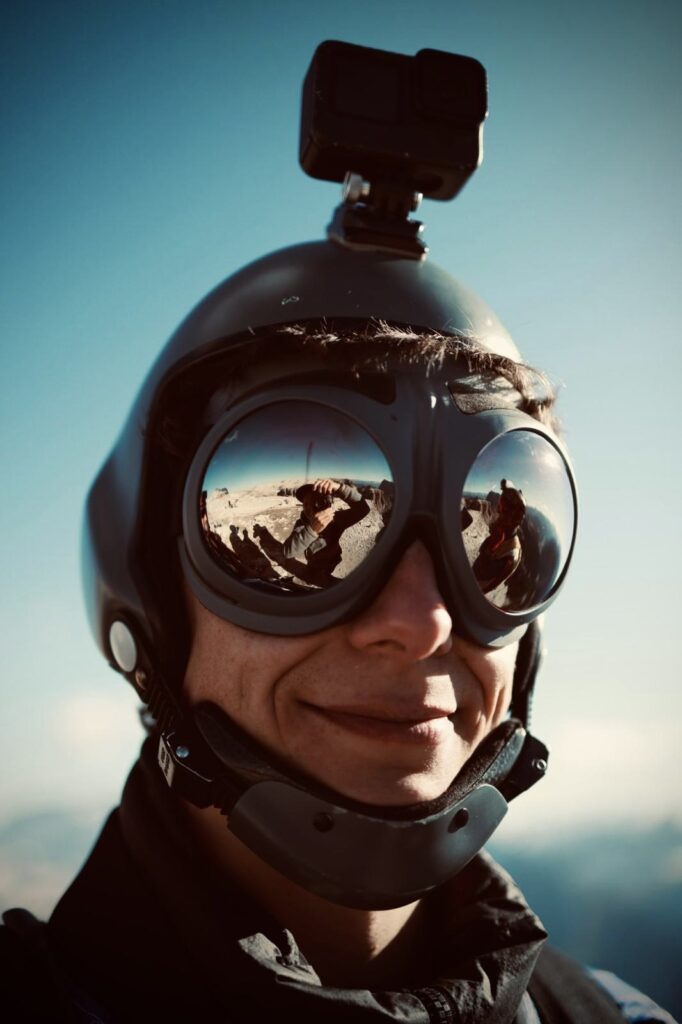
Arvid Endler
30 years old from Germany. Started Skydiving when he was 19, Base jumping when he was 22 and Wingsuiting in 23. For more than six years he has been coaching professionally and he spends the majority of the time as a full-time wingsuit tunnel coach in Stockholm now he has started to work in the new tunnel in Slovenia.
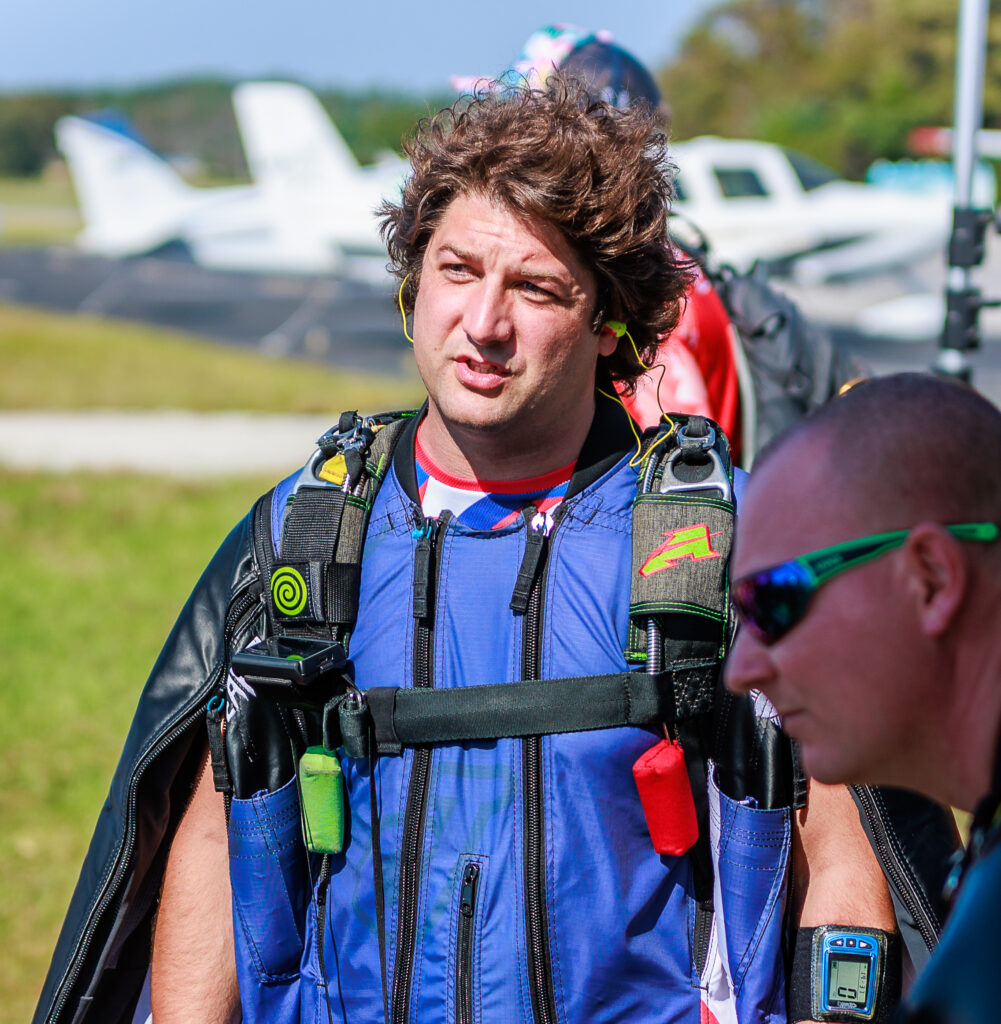
Jack Peploe
SQRL Wingsuit Coach, four-time national wingsuit acro champion, and lifelong student of the sky
Transcript
Arvid (00:00)
I push to the point that I know if I push further then I will lose the control but then I do it intentionally because I also want to know what’s happening then
Jack Peploe (00:09)
Welcome to the Leading Edge, the podcast that captures the art, science, and soul of wingsuiting. I’m your host, Jack Peploe, and today I’m joined by someone who has turned the tunnel into a laboratory for human flight. Some pilots follow a path, others build one. For our Arvid Endler, wingsuiting has always been about progression, from early skydives with base in mind to two years of full-time tunnel coaching to experimenting at the edge of what’s physically possible in wingsuit.
Arvid (00:39)
Hi, my name is Arvid Endler. I’m 30 year old from Germany and I started skydiving in 2015 and everything was focused on eventually wingsuit base jumping and then along the path, yeah, I got into the wingsuit tunnel. I worked there since, oh, 2020,
Jack Peploe (01:02)
Well, Arvid, look, it’s absolutely fantastic having you on the podcast. So thanks very much for coming on what patterns in movement or body input have you only noticed because of the tunnel repetition?
Arvid (01:11)
Probably things in my body that are not as obvious. Like when you skydive, people tell you about heads or shoulders or arms. But then they don’t really tell you much about, for example, the belly or the knees. Even though normal belly flying, skydiving, of course they use the knees. But I haven’t heard about knee inputs before I started doing them in the tunnel and the funny thing is I know now when I look back I use the knee inputs in the tunnel and I guess a lot of skydiver wingsuit skydiver use it too maybe not even knowing that I’m using this and this is so fascinating for me so when I started coaching it to give ⁓ my students even more insights about what they do I knew I already used them for at least a year but I wasn’t realizing it.
Jack Peploe (02:10)
Talking about the transition from tunnel to the sky, what elements of tunnel skill transfer perfectly to the sky in your opinion?
Arvid (02:17)
Probably all the basic flying, the flat flying. Of course, everyone who had a look at the tunnel noticed, you cannot go super steep because we are first of all limited by the glide ratio. In Slovenia, it’s 1.5 now. It’s a bit steeper than Stockholm, but it is still not very steep. And then also by the speed because of course, if you go steeper steeper outside, the speed increase massively and we don’t have plus 200 kilometers per hour speed in the tunnel.
Everything that is close to comfortable two-way or comfortable formation flying I think is very close to what you do in the tunnel and then when you bring it outside ⁓ it’s easy. I think in the tunnel people might struggle when they go out or when people go out they might struggle a little bit with the speed because it’s ⁓
Probably in general people fly faster outside and in a tunnel you get used to little bit slower flying. We can of course teach and train the speeding up part but in the end you need to do it then yourself outside and a comfortable flying position is not super efficient and super fast so that you need to do. But once you’re okay with it I think then all the flat flying on the belly on the back and transitions
Things what you do for, and I don’t know if you agree or don’t, but you’ve done Acro competitions now too. I think those stuff you can train super well in the tunnel and then you go outside. And what I noticed when I trained with Patrick so much is that I think when we trained and practiced in the sky, we mainly focused on how do we approach a certain movement.
Where do we look? How do we orientate ourselves? And not so much again about, okay, how do we do the barrel or how do we do the pancake? Because this is something, like I said, I’m sure you can practice it super well in a tunnel. And then suddenly you don’t have the box anymore. So now you need to know, okay, do I look to the other person? Do I just steer straight forward to try to be in perfect spot and present my arms and my hands for the other person?
So we were more figuring out how do we do those things rather than trying to improve our movements.
Jack Peploe (05:09)
How do you go about testing new movements safely in the tunnel before, before you even go ahead with them? What goes through your head?
Arvid (05:18)
I experimented and I tried a lot, especially also in the beginning when the whole thing was super new. Sometimes it’s just actually on the go. You have a session with a friend, with a coach or a friend or whatever and you’re just flowing a bit and then suddenly something happens and afterwards you’re like man that that was interesting, that was new or even the other person ⁓ is doing something and then you watch the video again and then you try to understand it and then try to think about how to practice it or I try to do it and then for some things for example I mean I know you know the front flips but I was also trying back flips and I still am eager to continue doing that eventually but
It’s a bit more sketchy and I was just… So my way to approach it was I was thinking how can I make it fairly safe? So I started with low speed just doing backflips in the wingsuit standing on the ground because even that is super weird already. And then slowly put the speed up to see if I can do it still from the ground back to the ground with speed what I could usually also fly on the back.
And I was thinking about this move for a year before I tried it the first time. ⁓ Flying and then crashing basically. And for me it’s something, it’s a bit like a mix from I try to think and analyze as much as I can with my knowledge about it and think about, how do I move my arms, my legs? And then I visualize a lot. with the backflip.
I remember that very well. spent so many evenings and nights just thinking about it and then, okay, but if I would do the arm here, what would happen then when I rotate and just picturing myself doing this movement with the airflow, that was crazy. I couldn’t sleep ⁓ super well because then I also know I really want to do it soon. So in the next week, next days, I’m finally going to try it for the first time.
And that stressed me because I know there’s a really good chance that I just end up landing on my neck. What I also did then for pretty much every attempt. So, and then there’s this point where I also accept, okay, I think I figured it out or at least thought as far as I’m able to think about it. And then when I actually started trying it and it’s funny, I think I did it two times for several attempts.
And that was it. And afterwards I thought, maybe I need to get better overall to get back. Nothing happened. I didn’t even hurt myself. I just really ended every time pretty much on my head. ⁓ So then I decided maybe it’s if I in the long term still want to do those things, I need to find a different way to practice this. And then, yeah, in the end, I went into the tunnel for that session. I was full of full on adrenaline, pretty nervous for sure but then I said okay now I just do it and then there was the point where I just was like okay I just do it and it kind of worked kind of failed but not in the bad way I didn’t hurt myself so I did it a couple more times figured out I don’t I’m not able to change much because I was also very intimidated by the ceiling on the front flip it was okay I’m I was good with the judgment of the height but on the back popping up into the ceiling I was thinking if I bang my knees in it I either break them or at least make a really bad crash down afterwards. So it was an interesting time. And then, sorry to go back to your question and how I approach it, I try to think as much as I can about the things I can think about. I guess I can say I’m okay with taking risks and then there’s the point where I feel okay I prepared and now I’m going to take the risk and ⁓ and then it’s either sometimes it works and sometimes it’s crashing so some other moves I was surprised I tried I thought about it might work then I tried things and I didn’t even hurt myself I didn’t crash and it kind of worked and maybe didn’t lead to anything cool or new or something I can really use but it was just good to try.
Jack Peploe (09:59)
Is there a potential where the tunnel can create false confidence if not managed
Arvid (10:06)
Look at me, I might be the best example for this, right? I’m really confident in my flying skills and I’m very comfortable with my wingsuit base jumping. ⁓ And it certainly comes from so much flying in the tunnel.
And for a regular customer, I don’t know. It’s probably, but it’s less likely, I think, because you need to spend really a lot of time in the tunnel to be able to do certain things. And I think if you respect what you do and you go also on your Skydive or Base Jump with Common Sense and
You still know the risk of it and if you feel the air, feel your body, you probably also notice when you get a bit close to the point. Let’s talk about the skydive. So close to the point where you probably know like, man, if I would have pushed the barrel to or double barrel or something a little bit more, I’m sure I would have lost it and then spun out or something. So I think that is hard because for me what changed in that way a little bit is maybe that I’m very aware if something happens and in skydiving I often push if I experience with certain movements or something I push to the point that I know if I push further then I will lose the control but then I do it intentionally because I also want to know what’s happening then and I don’t think someone who’s doing two to 10 to 20 hours in a tunnel. It’s like, yeah, man, sure. I just spin now until I completely risk a flat spin. So I think there’s this natural instinct what will make you pull out of this approach or this movement. And it’s like, maybe I hold back a little bit. I think it can create some, but I think it mainly comes with a lot of time in the tunnel.
Jack Peploe (12:10)
Let’s just say someone is due to go and do their first flight course. They want to go and get their wingsuit. At what point would you advise them to go to the tunnel, and what would the initial structure look like?
Arvid (12:29)
I would recommend to think about doing one to five hours. So I think this is a range. Let’s say if you end up doing this five hours within one or two years very early or even before your first wingsuit, first flight course, you get the base of understanding for belly flying, backflying, and then in five hours probably also about transitions. So. what will happen on your first flight course and during your first wingsuit attempts on the first flight course already you don’t need to worry much or maybe not really at all about will you be able to fly or not and I think that is something I can imagine is pretty stressful if you don’t know how the wingsuit flies you don’t know if it will be well and you probably saw a lot of videos and heard a lot of stories from friends that tell you
The third flight course went all over the place and somehow it worked and eventually I figured out how to fly straight, right? But then you also need to be aware about navigating and you need to be aware of not hitting the tail when you exit the airplane. there are many different factors, not ending up in a line twist when you open what I think create a lot of stress and a very easy way is one hour of tunnel time. So you have an idea of how normal straight flying will work. And that takes a lot of stress away. So you can on the exit, think about the exit and then you know as soon as I’m in the air, safely after the exit, then I do what I already know. And then approaching the opening, probably in the tunnel we already did asymmetrical flying, those kind of stuff. So you’re not stressed about if I might drop left or right because you have an idea how to compensate it or you already can fully fly with one arm in both arms and those kind of stuff. So again, on the opening, you’re not overwhelmed by your flying and then thinking about opening, you just focus on what you were told about the opening. So I would recommend as early as someone possibly can go into the tunnel, get a base understanding of flying. And even if you then also say like, you know, wing-swinging is a cool hobby, tunnel is very expensive.
But I will pursue this hobby ⁓ twice a month in the summer, whatever. ⁓ Not super much, but what we can tell you about flying on the belly on the back and transitions ⁓ to give it a base is a lot. And if you never come back to the tunnel, but you heard about those three things already, you can continue making your own assumptions probably self-explained certain maneuvers, certain things to you. Watch a video of a friend, have an idea of what he should do or an idea of what you should do. And then you never need to go back to the tunnel. You have a fun hobby. Don’t need to spend heaps of money, but you can skip a lot of sketchy moments in the beginning, I guess.
Jack Peploe (15:39)
What is the biggest lesson or mistake that you’ve learnt in your journey of wingsuiting so far?
Arvid (15:45)
I’m pretty happy that I haven’t had any close calls. think one lesson, it wasn’t really crazy, but it was my only cutaway so far. It was something, when I look back, it was a valuable lesson because was a very big wingsuit. I flew. We flew pretty slow. then afterwards I was just… I was not thinking really about… I didn’t make a real game plan for what do I do after flying away. Not thinking about how big the wingsuit is or anything. So I flew slow. I didn’t speed up. then…
Just without any thoughts I started flaring a little bit, what was completely stupid because I stalled the suit. ⁓ So when I pulled nothing happened. My pilot suit was on my back. So I noticed that because it took a very long time and then I started shaking a bit. Then I saw my canopy in front of me because I was certainly I was very slow, big, big burble. So I saw big bunch of canopy in front of me. ⁓ What was very helpful in one way that now I was like, fuck, it will for sure go to shit. So I could cut away pretty much immediately, but I was very surprised how quick the canopy went. Absolutely nuts with me. And I think if I wouldn’t be already prepared that this will now be a cutaway, I don’t know. So after that, I could believe that
It’s hard to cut away and reach the cutaway handles once you’re in a big, spin because one side of the canopy was fully inflated, the other side was a big ball. ⁓ And I think what I, what was, it was a valuable lesson because it taught me that even on a jump what was nothing special for me at that time. So nothing where I feel like, my God, that will be difficult, anything. You maybe want to go through the procedures of emergency and thinking about things. just raising the awareness that I cannot just not think at all, have a good time with people, chit chat and not paying attention to anything. ⁓ I think that was a really good lesson for me. And I can say in base nothing happened so far where I felt like, so lucky.
Jack Peploe (18:16)
Well, not lucky. I’m sure that’s down to preparation. Long may that last, Arvid But look, a huge thanks for coming on the podcast. I’ve really, really enjoyed chatting to you.
Arvid (18:32)
I’m happy you asked and I was pleased that I could be here and for sure I love to talk about it. love to coach, I love to fly and I look forward to just do exactly that in the next weeks here in the tunnel again.
Jack Peploe (18:48)
Huge thanks to Arvid for sharing his journey, not just the movements and progression, but the thinking and preparation behind them. His story is a reminder that growth in wingsuiting isn’t accidental. It’s built through repetition, curiosity, and the discipline to prepare before you ever take the risk. If this conversation made you rethink how you approach learning, experimentation, or preparation in flight, share it with a friend and follow The Leading Edge for more stories from the edge of human flight. I’m Jack Peploe and this is The Leading Edge.