
Podcast Summary
In this episode of Leading Edge, Dan challenges common beliefs around flaring, suit upsizing, and readiness. We explore why mindset matters more than numbers, how honest self-reflection shapes better pilots, and why widening awareness, not chasing size is what truly builds long-term skill in flight.
What you’ll hear on Leading Edge:
| 00:00 | Introduction |
| 01:47 | When Coaching Became as Important as Flying |
| 02:49 | Challenging Common Progression Beliefs |
| 03:21 | Readiness Beyond Jump Numbers |
| 04:52 | Coaching Confidence Without Crushing It |
| 05:48 | When Experience Becomes a Liability |
| 07:24 | Different Disciplines, Different Games |
| 09:12 | Redefining a “Good” Wingsuit Pilot |
| 10:22 | What Keeps People Flying for Decades |
| 11:33 | The Case for Smaller Suits |
| 13:05 | More Information, Not Less |
| 14:43 | Closing: Coaching for the Long Game |
Guests
A huge thanks to Dan Darby here for joining me on the podcast:
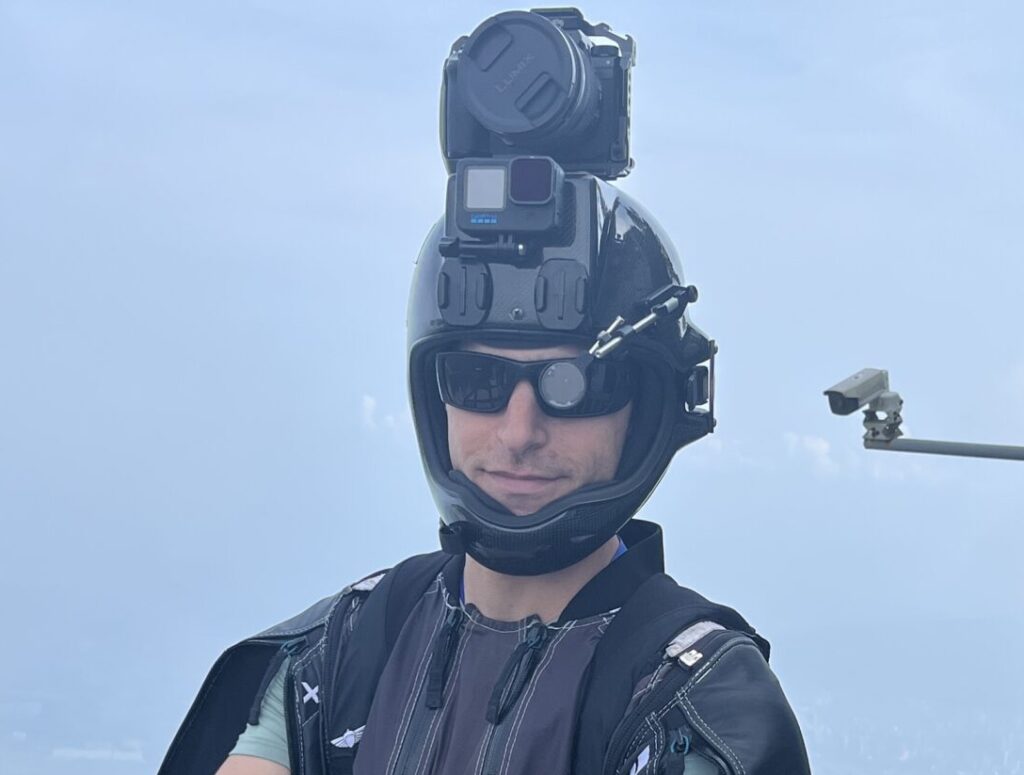
Dan Darby
Skydiving since 2007, BASE since 2009, calls deland FL home, co-owner of Arcus Flight, a wingsuit rental and training company
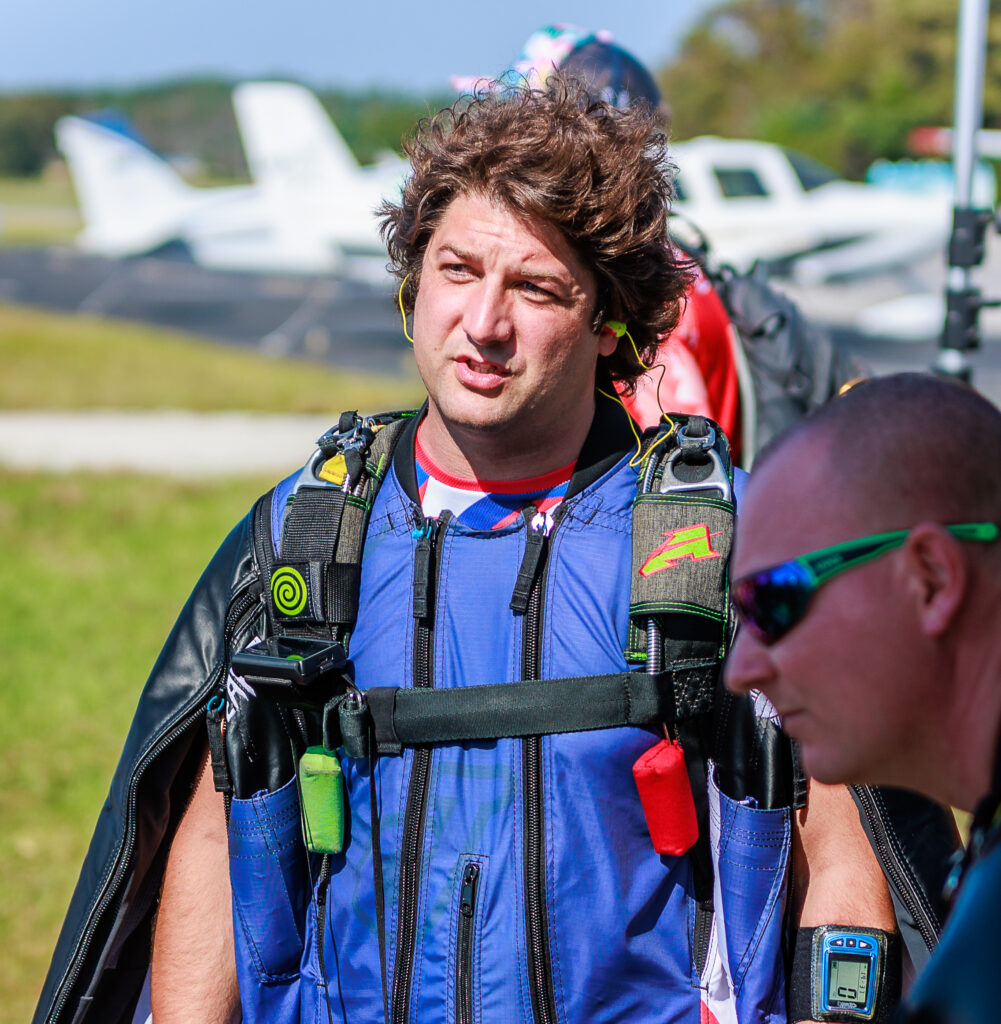
Jack Peploe
SQRL Wingsuit Coach, four-time national wingsuit acro champion, and lifelong student of the sky
Transcript
Daniel Darby (00:00)
Flaring can be used appropriately at certain times, but unless your skimming across the ground and then flaring to gain altitude for deployment time, it is absolutely not the only or sometimes not the best way to control your airspeed before you deploy.
Jack Peploe (00:16)
Welcome to the leading edge, the podcast that captures the art, science and soul of wingsuiting. I’m your host, Jack Peploe And today I’m joined by someone who has quietly shaped how modern wingsuit progression is taught. Some pilots chase bigger suits, others chase jump numbers, but for Dan Darby, it’s about foundations, slowing down, widening awareness and truly learning what the suit is telling you.
Daniel Darby (00:43)
Hi, I’m Dan Darby. I am a co-owner and coach at Arcus Flight out of Deland, Florida. We specialize in wingsuit training and we have a rental program where we can ship suits across the U.S. in blocks of five weeks.
Jack Peploe (00:57)
Nice. Dan, this seems like a really stupid question to ask you because I think most people know who you are, but many people may know you by your name, not maybe your full journey. So how would you describe what you do in the world of wingsuiting today?
Daniel Darby (01:12)
We really believe in the taking your time, nailing down the skill sets, the drilling through the basics, doing everything slowly, like progressing through all the suit sizes, not rushing, taking your time, getting a solid foundation really built up. And so we have all the different suit sizes in all of the different like human shapes, so that we can take you through your first Wingsuit jump all the way up until you’re getting ready to do competition or Wingsuit base or whatever it is that you’re seeking.
Jack Peploe (01:47)
You yourself, you’ve moved sort of fluidly between sort of skydiving base, obviously a bit of filming, obviously the coaching side, which is massive. Was there a moment when teaching and mentoring became as important to you as flying itself?
Daniel Darby (01:59)
Yeah, so I really enjoy the, uh, the helping people achieve their goals kind of part of teaching. And I started working at a vertical tunnel in 2013 or 14 and started to see the way that coaching could be applied when like you’re actually working with students in the way that they like took people through coaching.
Versus the way that I saw coaching being done in a skydiving environment. And I definitely felt fortunate to get to experience that, become a tunnel instructor, tunnel coach, get to learn all of those lessons, and then take that skill set and bring it into the skydiving, wingsuiting, space jumping world to help guide people in the way and give them the tools that I think should be used.
Jack Peploe (02:49)
What’s something, you know, that the Wingsuit community believes strongly about, you know, progression wise that you fundamentally disagree with?
Daniel Darby (02:57)
Fundamentally disagree with the thought process that you absolutely have to flare to deploy. There are many tools to control your airspeed. Flaring is one of them and it can be used appropriately at certain times, but unless your event’s skimming across the ground and then flaring to gain altitude for deployment time, it is absolutely not the only or sometimes not the best way to control your airspeed before you deploy.
Jack Peploe (03:21)
I know sort of jump numbers is another one that sort of a lot of coaches do push back on because, you know, people sort of rushed with jump numbers and climb up with those suits. But if jump numbers were sort of removed entirely, what indicators would you actually trust to judge, say, readiness of a person, you know, with regards to, say, let’s say, pursuit progression?
Daniel Darby (03:43)
So that’s something that comes up with us a lot, right? Because we have all the different suits. And so it’s easy for people to ask us like, hey, can I just have the next one? Like, no. Yeah, I’m sure that you have that minimum that the website says, but it’s really not just about that, right? And we actually encourage people to spend a little bit of extra time in the beginner suits before they start moving up. More than any sort of skill set, I think it’s a mindset shift that we start to see happen where right at the bare minimums, if you make the switch at that point, you’re still gonna be white knuckling through your first set of jumps in the bigger suit, right? And until you have widened your scope of focus a little bit, and you’ve been able to slow down the mental processes and take in more information per jump, you’re not there yet. And it doesn’t really matter if you can do transitions or go over your head or do any of those kinds of things, right?
But I think that until you’re able to perceive everything that the suit is telling you, then it’s not quite time to be moving on.
On top of all of that, we need to see good deployments. That’s kind of like a, a bare bones.
Jack Peploe (04:52)
When you’re watching a flyer for the first time, what tells you more? Is it how they fly or is it how they talk about their flying?
Daniel Darby (04:58)
So anybody who’s taken like a USPA or BPA coach course, right? You always get to hear the student’s perspective on the jump first, right? And I know very early on how the rest of the day is going to go after the first jump when I either get a inflated representation of how they thought that the jump went or a very accurate representation of how the jump went. And…typically, the more accurately you can remember, recall, perceive, report about the jump, the more ready you are to actually learn. And you’re perceiving things realistically, and you have been able to move past the personal experience, and you can be more objective about the learning process, the performance, and that kind of thing.
Jack Peploe (05:48)
So I’m going to pick on the former of that. And you’ve got that student because this is good for the coaches out there, right?
What’s the hardest thing to teach someone who already thinks they’re doing say, I don’t know, pretty well, you know, they come back, they’ve got that sort of inflated experience where it’s like, that was amazing. That was awesome. I did it. I did incredible may not come out quite like that, but how would you deal with that sort of person?
Daniel Darby (06:10)
Nobody’s skydiving or wingsuiting because they have to, right? We’re all here because we want to. And I don’t want, like, my job is not to burst anybody’s bubble. And I don’t think that like forcefully humbling people is productive in any way. I think that if somebody does come off with that, can, there’s still an opportunity to show them like, yeah, that was.
Daniel Darby (06:34)
That was a great attempt, but what if it was a little bit cleaner here or what if we improve this one segment of it and how much better would you feel if we weren’t so concerned about this other part? And so I think that even if they have a bit of an inflated representation of how they think that a jump went through their skills are, there’s still more to learn. know, I was in a vertical tunnel yesterday after having flown 2,500 hours and I was still like, getting coaching, you know, like I really enjoy the ⁓ act of learning. think it’s a, ⁓ it makes the whole experience a lot of fun. And I think that that can be, you can give that to your students regardless of what they perceive their skill set to be.
Jack Peploe (07:09)
At what point does experience become say a liability if it’s not paired with that reflection component?
Daniel Darby (07:30)
That’s a pretty big question, right? Because we see that happen where people have…lots of jumps or lots of specific kinds of jumps and then they want to go start doing other things whether that be like more hardcore proximity lines or just shorter start base jumps or whatever and they come in with a level of experience of whatever it is that they’ve been doing and I think that that experience counts for something when the reality is that like you have to approach each of these different things as an entirely new discipline.
Just because you’re wearing the wingsuit doesn’t mean it’s even the same genre of flying, right? And
So I think that it’s pretty important to recognize the differences. Like I know that I’m not a short start guy, right? Like I don’t do that kind of jumping. And even though I have all my fly set numbers and I know what I realistically could achieve, it’s not the part of the game that I push or the kind of thing that I want to pursue, you know? Like I…
I acknowledge that performance flying and speed are kind of where I really like to be and flying close to things is fun, but it’s not like the goal isn’t necessarily to get closer to things. I like going faster. I like having a little bit more of available lift, but the short start game is not my thing. And I really appreciate the people who go out there and do it. ⁓
I think that getting to see what can be done is impressive, but it’s not for everybody and it’s a very different flying style.
Jack Peploe (09:12)
Obviously the world of wingsuiting has changed phenomenally over the years, like everything has changed. But how is your definition of say a good wingsuited changed over time?
Daniel Darby (09:23)
So I think that I’ve started to appreciate the…the more well-rounded flyers more than I guess I used to, know, ⁓ trying to do this without naming people specifically. ⁓ But I think that the…people who can find enjoyment in flying of all of the types is
more impressive than the people who only can do this one kind of thing all the time. Right. ⁓ like I, I like seeing the people who wants to go do fun flocking jumps and then go do performance flights and then go do kind of like exciting two ways and just having a good time in all of the aspects of flying.
And I, yeah, I think that it’s, it’s fun to be a specialist, but you’re losing out on the rest of the experience.
Jack Peploe (10:22)
What keeps the people in the sport for decades and what quietly filters people out from your perspective.
Daniel Darby (10:29)
If you think that there’s only one kind of flying that is fun you will find your your personal limit in that right but if you can find enjoyment in doing multiple things then there’s so much to learn in every aspect of flying and I don’t think that they nobody will ever be done learning right there’s always more in different aspects and
As long as you can continue to appreciate the challenge of learning and the fun you can have of pushing yourself to grow in different directions and not just one thing all the time, then you’ll stick around for a long time. But if you get so focused on just this one thing all the time, you will eventually hit your personal limits. And if you can’t…appreciate the growth in other ways, then you may find yourself not bored, you know, finding less reward.
Jack Peploe (11:33)
If the Wingsuit community improves sort of just one thing globally around sort of coaching and mentorship, what would have the biggest impact on progression in general?
Daniel Darby (11:42)
Flying the biggest suit as soon as you can is not going to make you a better pilot, right? I talked earlier about the widening your scope of focus, right? I would always rather be on a jump with somebody in a smaller suit who could tell me, well, yeah, I saw that the other wing suit group was doing this over there on their skydive while we were flying. Like if somebody is that…tuned in to what’s going on in the world around them, I would always rather be on a jump with that person than the guy that was so hyper-focused on just being so locked in on what was going on in his world that ⁓ he completely tuned out everything else. I want the person that is more spatially aware, more… clued into what’s going on. And I think that it would do people wonders to spend a little bit more time a little bit earlier on just appreciating the physical space that we’re occupying while we’re flying. And I think that that would be hugely helpful.
Jack Peploe (12:47)
I think kind of as a community, we possibly need to do better in trying to enable people in the smaller suits. Because I know in the UK, it is almost like, you know, people jump up in these suits. And it’s almost that the smaller suits are kind of forgotten. So I think as a community, we need to do better.
What’s the biggest mistake or lesson in your flying career that fundamentally shaped how you coach today?
Daniel Darby (13:10)
I started skydiving at a time when wingsuit coaching hadn’t really come up yet. know, like there were a few people who kind of specialized it, but it wasn’t something that was happening at every drop zone all the time. And there wasn’t a huge…like wingsuit population to pull from. And there were precious few resources online and there were just not a ton to be found on your own. So I don’t know if I could say that it was a mistake or just like it was what was available to us at the time, you know? Now I think that I have…really tried to give as much information to as many people as possible, you know, like, ⁓ I was having this conversation with somebody in 2019. It had to be about like how much information should be available to the general public public, because you could find that somebody puts themselves into a worse situation because they felt armed with more knowledge. But, ⁓ the guy that I was talking to, and it stuck with me, he says that I’ll never come out in favor of less information. know, like at bare minimum, at least they have heard the concepts and stuff like that, you know. And so I think that seeking out information, I want to provide as much information as possible. ⁓ And I won’t hold that back from anybody ever, really.
Jack Peploe (14:43)
Dan, that’s awesome. And I’m completely aligned with that. It’s definitely the journey that we’re trying to take. kind of hats off to you. You’re a huge credit to the Wingsuiting community and a massive thank you for coming on the show. Really, really appreciate it.
Daniel Darby (14:57)
Thanks so much for having me, Jack.
Jack Peploe (14:59)
Huge thanks for Dan for sharing his journey, not just the flying, but the philosophy behind how pilots are built. His story is a reminder that real progression in wingsuiting isn’t rushed. It’s earned through patience, honest self-reflection, and a commitment to mastering the fundamentals before chasing the next thing. If this conversation made you rethink how you approach learning, coaching, or progression in flight, share it with a friend and follow The Leading Edge for more stories from the edge of human flight.
I’m Jack Peploe and this is The Leading Edge.