Podcast Summary
In this episode of Leading Edge, Espen breaks down his philosophy on preparation, planning, and personal responsibility in wingsuiting. From competition and high-stakes filming to walking away from perfect conditions, he explains why true freedom in flight comes from reducing uncertainty, respecting risk, and treating preparation as the ultimate safety system.
What you’ll hear on Leading Edge:
| 00:00 | Introduction |
| 00:53 | Freedom Above Society |
| 02:42 | The Performer’s Mindset |
| 04:25 | Rethinking Risk: Cautious, Not Reckless |
| 05:50 | Risk Lives in the Planning |
| 08:01 | Wearing Seat Belts, Literally and Mentally |
| 12:58 | Walking Away from the Perfect Jump |
| 15:27 | The Hardest Lesson: Plan or Pay the Price |
Guests
A huge thanks to Espen Fadnes here for joining me on the podcast:
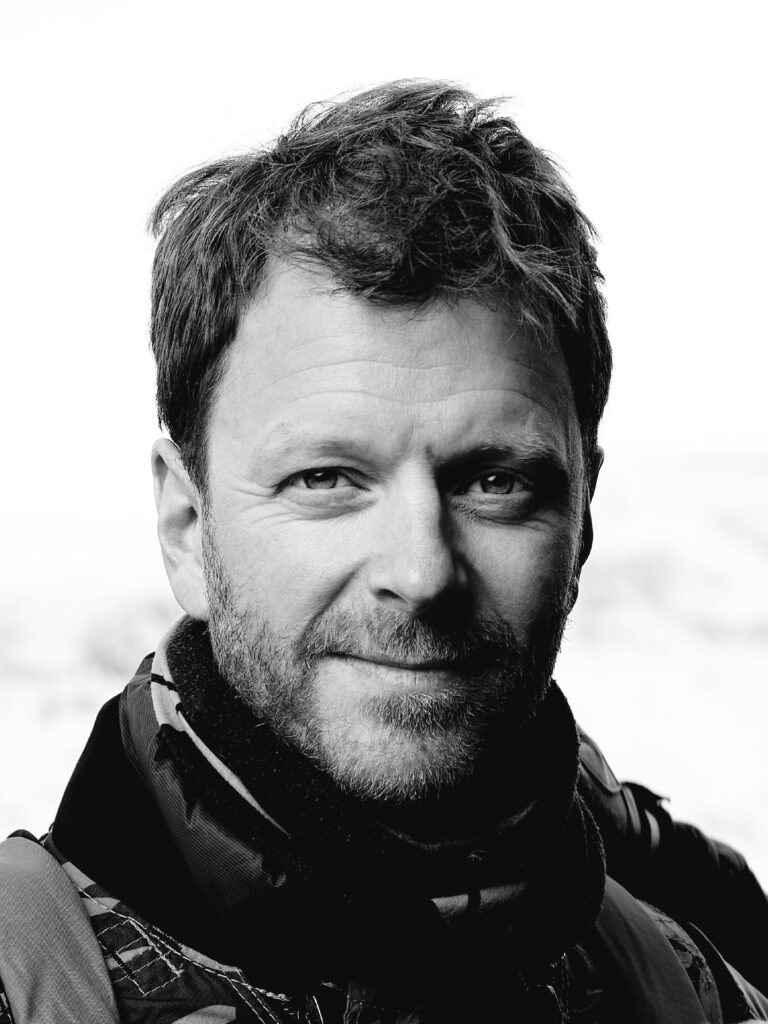
Espen Fadnes
Ive been completely addicted to wingsuit flying since I got out of high school. Thats 26 years ago. My professional life is split in three:
– Coaching (mainly tunnel)
– Aerial camerawork (Emmy nominated, Actors Guild Awarded)
– Performer (World Champion, World Cup Winner, project driven)
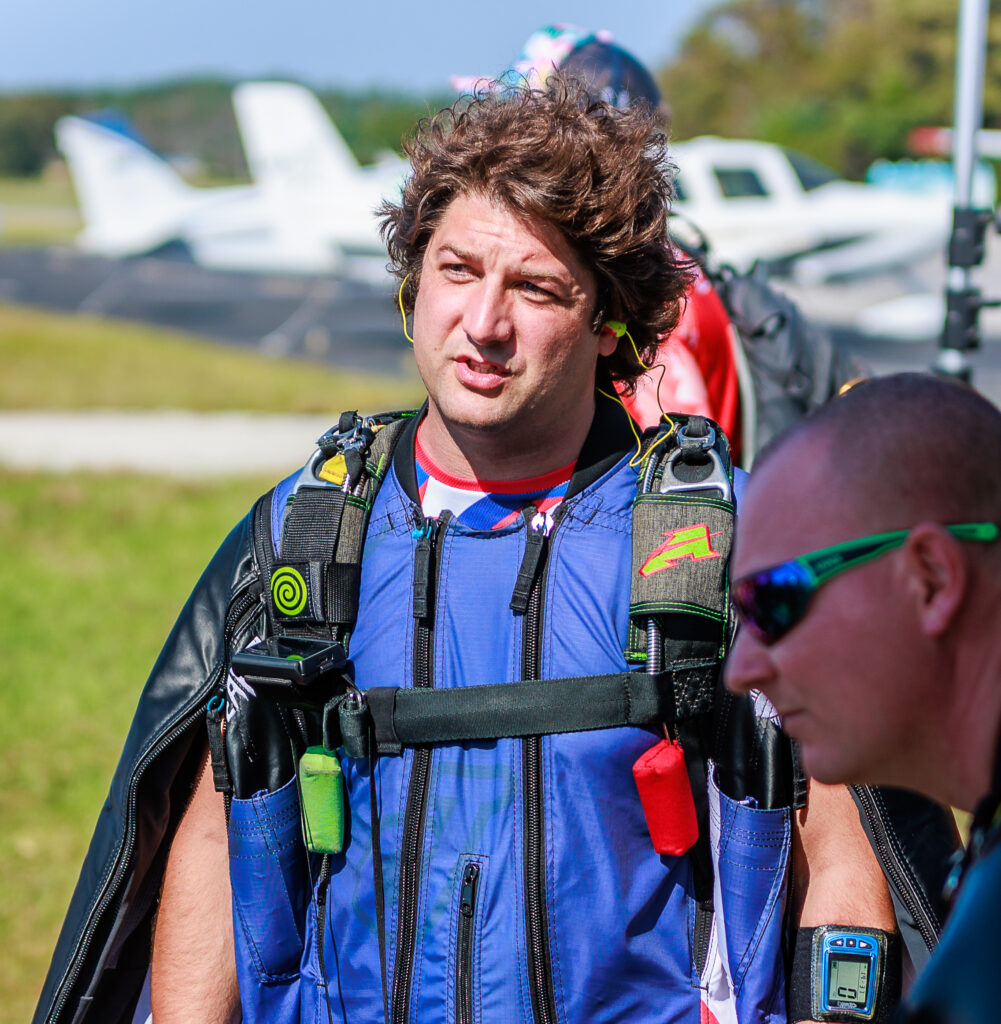
Jack Peploe
SQRL Wingsuit Coach, four-time national wingsuit acro champion, and lifelong student of the sky
Transcript
Espen (00:00)
It’s all about preparation. because risk is the uncertainty. it’s what you don’t know. And then the consequence of when something goes wrong in your activity. So it’s all about decreasing uncertainty, decreasing the chances of something going wrong. that’s happening in planning.
Jack Peploe (00:17)
Welcome to The Leading Edge, the podcast that captures the art, science and soul of wingsuiting. I’m your host, Jack Peploe, and today I’m joined by someone who has shaped the way we think about risk, performance and longevity in human flight. Some chase adrenaline, others chase achievement. But for Espen Fadnes, it’s about control, pushing boundaries while wearing seat belts, both literal and mental.
From competition runs to high stakes filming and iconic projects, his philosophy challenges the idea that danger is what defines our sport.
Espen (00:53)
My name is Espen Fadnes and I have been wingsuit skydiving and wingsuit beige jumping for more than half of my life and I’m 46 years old. It is my passion and my profession and I hope it’s gonna be so until I’m 100 years old.
Jack Peploe (01:09)
Espen It’s super exciting to have you on the podcast. Thank you very much for joining me on the leading edge. I kind of want to sort of jump into the world of risk, but before I do, I want to sort of understand what got you into this in the first place. Like you say, you’ve been doing this for almost half your life. So I won’t quote the number because that would be terrifying. But what is it about wingsuiting that hooked you so deeply so early?
Espen (01:33)
When I grew up, I loved playing. Just, I found the world too serious. I just wanted to get out of the classrooms. I just wanted to have fun. I wasn’t necessarily the young fella that trained the hardest to run the fastest or the furthest. I just wanted to play. And whenever I was high above society, whether I was climbing a mountain or just on top of building, I felt more free.
So when I discovered that there was something called skydiving, I just had to try it. And when I saw that you could fly like a bird, it just, it was almost meant to be. And when I started skydiving, I never felt that free. I never felt that…kind of like a bird. And wingsuiting just gave me much more of that. And I was there in the beginning in 2000 when wingsuiting was very young in skydiving And I could just see this is gonna be a journey for life. This is gonna be something I wanna be part of. And I never second questioned it. It was just to get going.
Jack Peploe (02:42)
Your professional life sort of spans multiple worlds, you know, from coaching to, you know, aerial videography to performance. know, which of those identities do you feel has shaped you the most as a wingsuit pilot.
Espen (02:55)
Think it’s the performer part that has shaped me the most. I am quite competitive. I do love to be quite ambitious. I like dreaming, dreaming big, dreaming far. And ⁓ it’s where I’m the least restrained. It’s when I just can be allowed to think of a dream or think of an idea or where I want to go and then just aim for that direction with everything I have. That’s something I’ve been very fortunate to do quite a bit.
Espen (03:24)
Quite a bit in my life in wingsuiting. And the times that brings me the greatest joy would be a fantastic performance run in a competition or flying a line down a mountain in exactly down to the smallest details the way I wanted to happen And I would say that early on I made this goal of trying to figure out how good I could possibly be in a wingsuit.
And I decided everything I was ever going to do in the wingsuit was to push me in that direction. So everything else is about a meaningful journey of finding my own potential. That could be, for example, in teaching others. That’s something that by teaching others, I teach myself and by following others with a camera, for example, ⁓ challenged to understand how other people fly and try to foresee what they’re doing. So it all goes down in the same bucket, a bucket of skills, understanding and learning.
Jack Peploe (04:25)
If we sort of hinge into that risk aspect, like what were you always a risk aware flyer or is that something you had to learn the hard way?
Espen (04:34)
I think there is a bit of a misunderstanding among people that to be a good extreme sports person you need to be very risk-witting. I think it’s on contrary to be safe-the-wear that makes a really good risk sports person. And when I was young I was never the guy that climbed the highest in the tree or took the most risks. In the second I saw that this could end with a broken bone.
I was, I was hesitating. I normally walked down and I saw a lot of my friends getting injured. I never broken a bone in my whole body and my whole life. And I think it’s because I’m a little bit afraid or aware or I mean, you can put the label or a name on this in many different ways, but I think cautious could be one of the better words to put on it. And that cautiousness.Followed me through the skydiving course, it followed me through the journey of becoming a skydiving instructor, becoming a be jumper. I’ve always been cautious, always. The red light has kind of been blinking around me constantly my whole life and it has never stopped. I think it’s healthy and a very important part of staying safe.
Jack Peploe (05:50)
When you’re sort of planning, you know, a project, competition run, you know, or filmed a project, where does risk actually enter the conversation for you? Is it early or is it right at the end?
Espen (06:01)
It’s all about preparation. Everything is happening in advance. because risk is the uncertainty. So it’s, it’s what you don’t know. And then the consequence of when something goes wrong in your activity. So it’s all about decreasing uncertainty, decreasing the chances of something going wrong. And that’s, that’s happening in planning. And, ⁓ I used to be more, I would say chargey and it had to do with, having lot of ambitions and perhaps like make a stand or getting somewhere in the sport. But along the way, I’ve more and more become very clear on one thing. The greatest joy I get in a skydive or a be jump is to plan it down to the smallest detail, everything from when I leave the aircraft or the mountain until I stand with two feet on the ground and that I follow that plan in detail and I never deviate from the plan. It’s just it’s down to the detail. That’s what I did. And if I’m able to do that, I have the greatest joy ever. But if something was wrong, like if I have a plan and then for some reason I just end up not doing the plan, it goes cold down my spine. It’s very uncomfortable and I can get very upset.
I met a lot of people that can land after almost like just surviving something really bad and then they show joy and and stoke it’s like they’ve gotten this adrenaline kick and When I when I see them, I don’t understand them. I just I just don’t get it because what I see is Quite frankly terrible and luck at the same time
Jack Peploe (07:46)
I suppose it’s an element of surprise and I suppose the stoke might be, can’t believe I survived that, but it’s almost a fear reaction more than anything possibly. But you’ve talked about sort of wearing seat belts, having systems that allow you to push hard while staying in control. What do those seat belts look like in wingsuiting?
Espen (07:58)
Yeah
Yeah.
That’s a good question. So first of all, I would claim that half of the wingsuit community globally are not wearing seat belts in aircraft going up to a thousand or fifty hundred feet when you can take them off. And we’ve had a lot of airplane crashes the last couple of years. And I have wingsuit friends that have been part of those crashes without seat belts and miraculously survived themselves and miraculously not.
Espen (08:43)
Killing anyone along the way of their bad choice of not wearing seatbelt. So that’s the physical seatbelt. But I would say that the second seatbelt, which is honestly much more important, it’s to prepare. It’s to prepare yourself and it’s to prepare together with those you are going to skydive with or be jump with.
Jack Peploe (08:53)
Yes.
Espen (09:10)
It’s to listen very carefully to the dropzone briefing. It’s to understand the rules and regulations of wingsuiting and skydiving. It’s about taking it seriously. A lot of people have this almost like objective view on risk. So they say, ⁓ skydiving is so dangerous or basejumping is so dangerous. But in reality, I’m dangerous. It’s me and my decisions that are making what I do dangerous or not. Imagine if
Apollo 11 came to the moon and Neil Armstrong and Buzz Aldrin was just like, shit, my spacesuit isn’t fitting me properly. It’s, it’s, ⁓ or the oxygen system isn’t really working. That’s how things are looking like sometimes in aircraft. And they don’t do that. And we shouldn’t do either. We should be as accountable for our own safety as Neil Armstrong were in 1969. ⁓
The standard need to be loved, like we need to increase the standard as a community as a whole, I think.
Jack Peploe (10:11)
At the end of the day, what we do can be done safely. It is just being aware. And like you say, we are ultimately the greatest risk. It’s the human element that’s the problem,
Espen (10:23)
It really is. And of course, people die in traffic and airplanes are crashing. It’s part of life in a way. And in the second you are on the train or in a car or in an aircraft about to skydive, it can go wrong. But we should be ambitious to make it less likely.
Jack Peploe (10:33)
I love that. I love that on the sort of aerial videographer side of things. So putting that hat on and you’ve been sort of a camera flyer and some of the most ambitious wingsuit projects out there, know, films like Wingmen ⁓ and I’ll see now you’ve got this project with Amber crossing the channel, which is super exciting. ⁓ when you’re doing aerial videography or something like that, how does your relationship with risk change compared to sort of flying for yourself?
Espen (11:08)
That’s a very interesting question. So before I film someone, I don’t do this physically, but it’s almost as if I want to shake the hand of the woman or the man that I’m about to film and say, I’m shaking your hand now because I’m handing you my life. Your mid-air decisions is also
Espen (11:39)
Deciding a little bit of my own risk or a lot of it so being a camera person I follow something into wherever they go and Of course I can while filming I can try and use a little bit of energy on Checking out where we’re going for example. Are we going to the drop zone? Are we going to the middle of an ocean or where are we on?
Espen (12:06)
About to stall the wings for a ridge. I can have a look at that and I can place myself in ways that give me a little bit of leverage, little margin. But ultimately, it’s a lot about that leader, a lot about that person that I’m filming. And it’s the most serious thing I do is to film people. And it’s game or a way of flying where we have seen, unfortunately, a lot of highly talented camera persons, camera people both die and miraculously survive because of mistakes of the leader of the jump. it’s a bit of a… You can’t really get more on the risky side than being a cameraman.
Jack Peploe (12:41)
Tto be fair, never considered that. is, yeah, mind blowing to think like that. Kind of going on to one of the comments that you raised earlier around sort of the risk versus reward aspect. Have you ever walked away from something that looked incredible on paper because the risk to reward ratio wasn’t right? And, you know, ultimately what guided that decision?
Espen (13:14)
Actually, I’ve walked down from many gems and yeah, probably missed out on some amazing ones. I think the most amazing story with this was back in 2014 where…
Me and a group of people spent two months in Antarctica and we spent seven days climbing a new route on a mountain called Ulvetanna. It’s one of the most iconic and beautiful mountains in Antarctica. And both me and another girl, Kersti Eide, had the be race with us and we were meant to jump from the top. And we summited, but the climbing leader, of that trip didn’t want us to jump because there was a bad forecast. So none of us jumped. On a day where it was no win at all, zero win, blue sky. was, I mean, in Antarctica, it was the biggest landing area in the world. Antarctica is big and it was just perfectly flat. And down there we had a tent with food. We even had a couple of, we had a bottle of ⁓
I think was whiskey and just like everything we dreamed of was just down there. And it was the most remote and amazing exit point that I do believe we have in the world. And we stood up there and it wasn’t my decision, it like I came up, came to a decision, it was a group decision, but me and Shashti climbed or walked away from that.
Jump on absolutely perfect conditions. Looking back at it, it turned into that we helped as best as we could the group to get safely down from the mountain, which is really meaningful. But until I die of hopefully age, I will always think back at how it was to stand on top of Urbidana in Antarctica and ⁓ walk away from it because it’s the most beautiful and amazing exit point that I’ve ever seen in my life.
Jack Peploe (15:11)
I can’t believe it’s this time Espen, but this has been really, really, really awesome podcast. I have got to ask you one final question and that is what is the biggest mistake or lesson in flight that fundamentally changed how you think about risk?
Espen (15:29)
Ha
I actually think it is the realization that if I don’t plan on things in advance, I do mistakes in free fall. And I have had, I would say somewhere between five and 10 really bad, sketchy, really ugly situations in skydiving and be jumping where people are free fall passing each other or I’ve almost stalled out and crashed in a forest or I… almost hit the talus, like really bad things. And every time I realize I need to plan better, alone and together with others. Because the only way to avoid these mistakes is by planning. That is my main thing.
Jack Peploe (16:24)
Well, Espen, thank you so much. This has been, like I say, a really, really fantastic episode and I could literally chat to you for another several hours, but we’re going to have to call it here, but thank you very much.
Espen (16:36)
And thank you, Jack, for letting me be part of your awesome podcast.
Jack Peploe (16:39)
Huge thanks to Espen for sharing his journey, not just the flights and achievements, but the philosophy behind them. His story is a reminder that real freedom in flight doesn’t come from ignoring risk. It comes from understanding it, planning for it, and respecting it every single time. If this conversation made you think differently about preparation, responsibility, and what it truly means to fly well, share it with a friend and follow The Leading Edge for more stories from the edge of human flight.
I’m Jack Peploe and this is The Leading Edge.