
Podcast Summary
In this episode of Leading Edge, Fiona Jansen shares her journey from engineering and academia to becoming a senior flight master in the wingsuit tunnel. We explore daily discipline, tunnel-driven progression, breaking barriers as a female coach, and why slowing down, staying intentional, and trusting your passion can shape an extraordinary life in flight.
What you’ll hear on Leading Edge:
| 00:00 | Introduction |
| 00:52 | Who Is Fiona Jansen? |
| 01:33 | Life Inside the Tunnel |
| 02:03 | The Joke That Became a Career |
| 02:50 | From Engineering to Full-Time Wingsuit Coach |
| 04:07 | A New Path: Wingsuit Acro & Team Sweden |
| 04:49 | Why the Tunnel Changed Everything |
| 05:38 | Barriers, Bias, and Breaking Through |
| 07:08 | Coaching Mindset and New Flyer Development |
| 08:11 | Coaching Mindset, Not Just Technique |
| 09:22 | The Mindset That Predicts Progress |
| 10:41 | Tunnel vs. Sky: What Actually Transfers |
| 11:22 | The Future: Vertical Tunnels & Next-Gen Training |
| 12:09 | Redesigning Wingsuit Culture |
| 13:08 | The Biggest Lesson: Don’t Wait to Pursue Your Life |
| 14:20 | Closing: Focus, Fire, and the Path Ahead |
Guests
A huge thanks to Fiona Jansen here for joining me on the podcast:
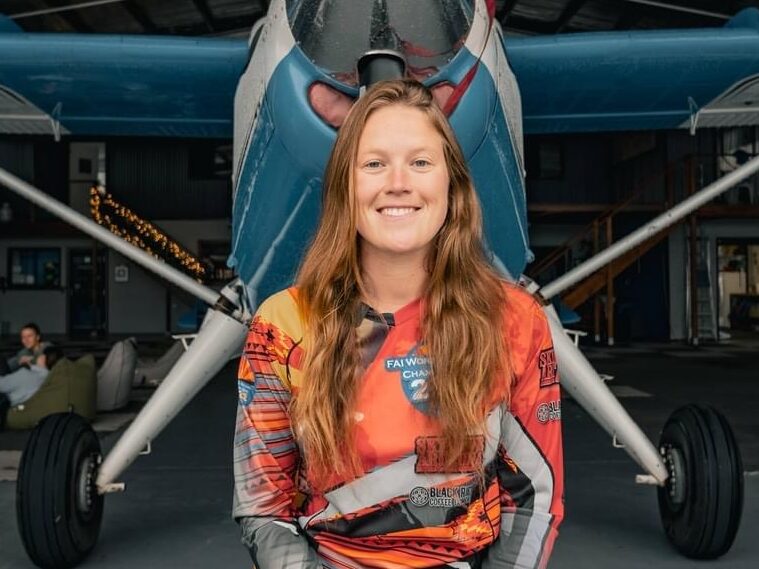
Fiona Jansen
A senior flight master at Indoor Wingsuit Stockholm, has 500 hours in the tunnel and 1100 Wingsuit jumps! She coaches indoors full time but often travels around the world for private outdoor coaching and events! Next year she will be representing Sweden at the World Championships in Wingsuit Acro!
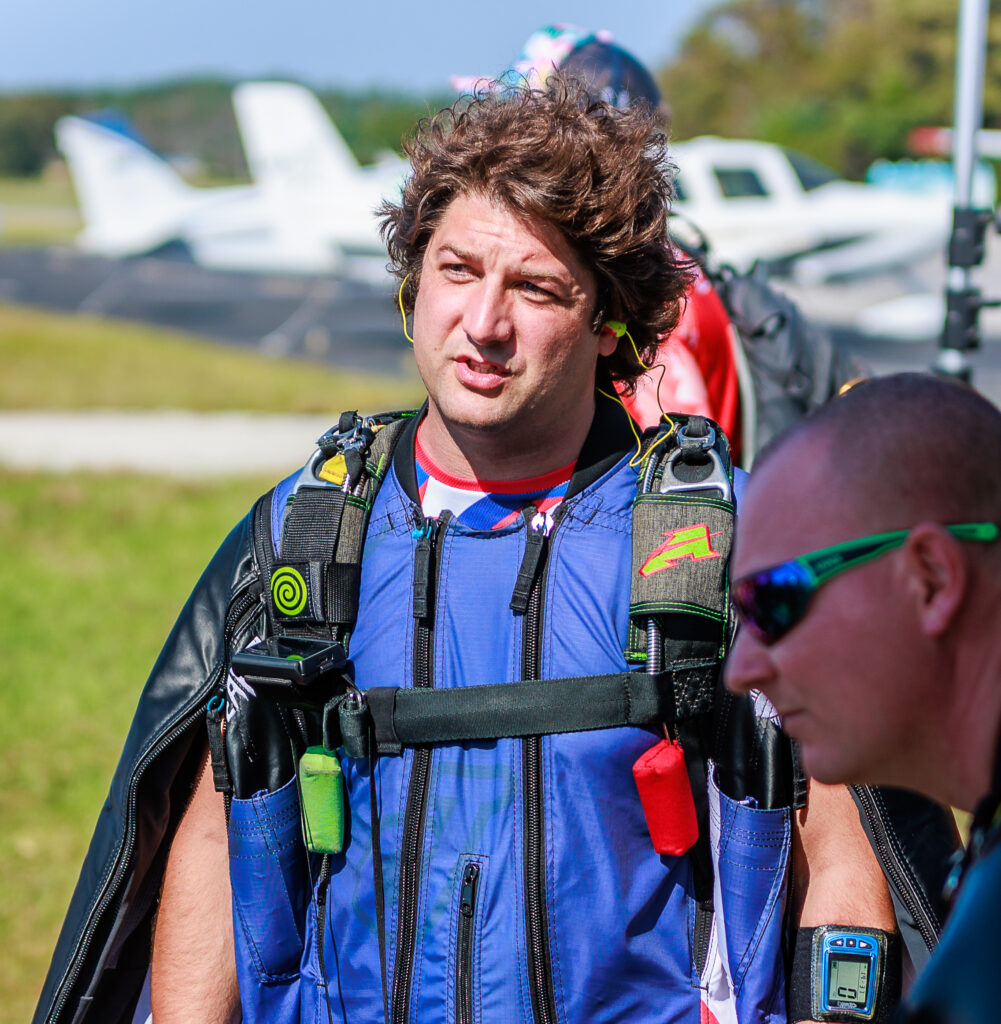
Jack Peploe
SQRL Wingsuit Coach, four-time national wingsuit acro champion, and lifelong student of the sky
Transcript
Fiona (00:01)
For most of my life, I was super focused on academia, engineering, all this kind of stuff, because to me, that’s what I was taught to believe is the only way that you can live your life. And I’m realizing now that’s absolutely not true. And I wish that I pursued my goals sooner and my dreams sooner.
Jack Peploe (00:18)
Welcome to The Leading Edge, the podcast that captures the art, science and soul of wingsuiting. I’m your host, Jack Peploe, and today I’m joined by someone whose dedication has reshaped what focus progression really looks like. For some wingsuiting begins with a plan. For Fiona Jansen, it started as a joke and became a life she never expected. From her first accidental wingsuit jump in Australia to becoming a senior flight master at indoor wingsuit Stockholm, Fiona has carved a path defined by intent, discipline and relentless daily training.
Fiona (00:52)
Hi, my name is Fiona Jansen. I am a senior flight master at Indoor Wingsuit in Stockholm. That’s my full-time job at the moment. I am originally from Germany, but most of my skydiving to date I’ve done in Australia. I started skydiving in 2019. I started wingsuiting the same year actually and now have approximately 1900 skydives, maybe 500 hours of flying in the tunnel and these days, wingsuiting is my life.
Jack Peploe (01:22)
And that’s very evident. Fiona, it’s great to have you on the leading edge. Thank you very much for coming on. Now for sort of anyone who hasn’t met you yet, how would you describe what you do in wingsuiting specifically today?
Fiona (01:27)
Thank you for having me.
Well, my day-to-day life these days consists of up to three hours of flying in a wind tube every single day. So as I mentioned, I work in the Wingsuit Tunnel in Stockholm. So all day, every day, I coach people indoors. I do quite a lot of outdoor coaching as well. So I’ve been traveling the world a lot, especially in the last year, to coach at lot of events, lot of private coaching. But basically, yes, my…job and my life is to fly wingsuits and to teach people how to fly wingsuits every day.
Jack Peploe (02:03)
What sort of first pulled you into wing suiting and how did that journey take you from outdoor flights into becoming one of the most sort of dedicated tunnel specialists in the sport?
Fiona (02:11)
Wingsuiting to me started as a joke to be honest. I had absolutely no intention of ever flying a wingsuit back in the day. ⁓ But when I reached 200 jumps in skydiving, which in Australia at my drop zone was the minimum jumps you needed to fly a wingsuit, I went up to a friend of mine who was a wingsuit coach and said, all right, it’s time, teach me how to wingsuit as a joke. So he handed me a wingsuit and he signed me up for the load and the next jump I did my first flight course. So that was not the intention whatsoever, but…
At that stage I decided, alright, let’s go for it. And then I… for sure! What have I him to thank and to blame for a lot of what my life is these days. But yeah, for a long time it was just something I did for fun, my favourite type of skydive. eventually I realised, you know, there’s not many women that do this. I’d love to…
Jack Peploe (02:44)
And he’s probably shaking his head right today, right? Thinking, why, why did I give her the wingsuit?
Fiona (03:05)
Encourage other women to do this and I think a good way to achieve that is to become a wingsuit coach. So I decided in 2021 I think that I wanted to be a wingsuit coach outdoors and then at the time I was working in engineering full-time so it was just something I did a little bit on the weekends for fun but at some stage I realized okay I love this wingsuit thing a lot I want to take it serious I might take a little break from engineering and see if I can get a job in the Wingsuit tunnel. Now it’s been almost two years in the Wingsuit tunnel and this little break I think is a lot more than just a break. I think this is what I’ll be doing for a very long time.
Jack Peploe (03:44)
So you are now taking sort of another, you’re going into another sort of avenue, which is sort of the wingsuit to Acro side of things, and you’re going be representing Sweden which is super cool at the World Championships in Elsinore, which is next year. What does that sort of mean to you kind of like personally?
Fiona (03:52)
Yes.
Yeah. It’s super exciting to me. I am someone who has always been extremely competitive ⁓ because I’m somebody that is very dedicated if I have goals to work towards. ⁓ for me, since all I do all the time is wingsuiting I wouldn’t be able to justify it to myself without having a goal that I work towards. This is one of my many goals, but the big one I’m focusing on at the moment.
So to me the Wingsuit Acro and the World Championships is something to work towards every single day. Like a big reason why I train every day and why I love my job so much is because I think it can get me somewhere with this Acro. Plus I have a really cool team, my team Incline Generation. I love them to bits, we have a lot of fun. So I think it’s just a really, really cool thing to do together. For a country that none of us are from, but for some reason we feel a strange connection.
Fiona (04:51)
It’s just Sweden since we all live and work here.
Jack Peploe (04:54)
Now you’ve been incredibly intentional and focused in the tunnel. What drove that intensity and what do feel the tunnel gave you that say the guy couldn’t?
Fiona (05:04)
I think that’s just who I am. If I love something, I go full steam ahead. It used to be me with music once upon a time, with snowboarding once upon a time, but maybe not to the extent that it is with wingsuiting. I was really dedicated in the sky before this as well, but the tunnel has made me realize that there’s a lot that’s only possible to learn in the tunnel or something that would take one million times more money and time to achieve in the sky. So I think the tunnel has given me this possibility to achieve a lot really quickly and to become as good as I want to become.
Jack Peploe (05:39)
If we can go back to sort of, you sort of mentioned facing some tough barriers, trying to make it as a female Wingsuit coach. Sort of what, what kind of challenges existed back then and what helped you navigate in a productive way.
Fiona (05:51)
Yeah, it wasn’t an easy journey for me. think any girl that joins skydiving at the beginning, it’s good fun. You get lots of attention at the drop zone. People want to teach you how to pack, even if you have three times as many jumps as them. know, everyone wants to be your friend. But it changed for me a lot when I decided I wanted to become a bit of a leadership role in that community. And a lot of the support turned on me. yeah.
I had a lot of people try to stand in my way that were convinced that I was too soft in character, I wouldn’t be able to be tough enough with people. I was told that I had to prove myself 10 times more than anybody else in order to be allowed to have a coach rating, which in Australia is quite a difficult process. I had rumors made up about who I am outside of skydiving and how I am in terms of safety in skydiving. A lot of things that were just absolutely not true. So yeah, it was not easy at all, but luckily I had a few people, one or two in particular, who absolutely believed in me and pushed so hard to help me get where I am. And now I look back and I laugh at the people who tried to stand in my way because look at them now.
Jack Peploe (07:09)
Completely understand why. Now we’re seeing more women stepping into wingsuit coaching and, you know, especially high level competition too. What do you think is helping shift that, you know, visibility and what still, you know, ultimately needs to evolve?
Fiona (07:11)
Yeah. I think it’s really cool. I went to the World Championships a few years ago, competed in Wingsuit Performance and there were three of us, three girls at the time in a competition of, I don’t know, 50 or 60 people. So there was not a lot. Now I can already see for the next one there’s gonna be so many girls in the competition, which is really cool. I won’t be competing in Wingsuit Performance, I’ll be competing in Acro, as you mentioned before.
But I think a big reason for that is just seeing women compete. It shows other women that it’s okay to compete even in a very male dominated field. But also they’ve introduced a women’s category for wing suit performance. And I think that’s great. It gives people a little bit more motivation if they have their own little world to compete in. So yeah, that’s a really good change that I’ve seen recently.
Jack Peploe (08:10)
No, arguably, you could say that, you know, women are sort of more capable when it comes to sort of Acro, would you say? Like, don’t know, like, just felt that the feeling that we within the latest to the competitors meet, that was something that was raised where we discussed the idea of, we introduce a female, you know, category within Acro? And it was kind of rejected straight away going, we’re going to be better than you. And it’s like, that’s awesome. That’s so cool.
Fiona (08:17)
In my opinion, no, women and men are probably just as good as acro. There’s different things that different people are better at. wingsuit of Performance, in my opinion, is a bit of a different story because it’s very much based on physical strength, even though that’s a whole topic that not everyone agrees on either. But I think in acro, there’s two sides of it. There’s the finesse and the style, which perhaps women might be better at in general, but it also involves a lot of strength. It’s exhausting. You have to use your body.
So I don’t believe there’s any pros or cons in being male or female for the Acro competition.
Jack Peploe (09:09)
Now, going back to the point of you mentioned that you coach all over the world, which is awesome. And you’ve been sort of all over the place, which is amazing. When you sort of work with the newer flyers, what do they often need most from a mentor, would you say?
Fiona (09:16)
Mm. That’s a good question. I think it’s a lot about coaching someone’s mindset. And this is something that I’ve learned a lot at the tunnel as well. Of course, there’s a lot of techniques that I can teach someone on how to do a clean transition or how to fly a wingsuit. But especially the newer flyers are nervous, you know, and they need to be coached on how to relax. And so I spend a lot of time changing my coaching methods based on who I’m flying with. I try to get to know someone and I spend a lot of time working on their brain and making sure that they’re relaxed and know what to do if something goes wrong. So that’s a big aspect for me if I’m coaching someone newer.
Jack Peploe (09:58)
If we take that to the tunnel, when you watch someone fly for the first time in the tunnel, what are the key patterns that instantly reveal where their flying is going to go?
Fiona (10:05)
Again, I think someone’s mindset. mean, it’s really difficult to stay positive in the tunnel for everyone, but there are some people who are much better at dealing with failure than other people. And the students that I love to coach the most are not necessarily the best flyers. I mean, of course, they’re a lot of fun to fly with. We get to do advanced maneuvers together, but it’s the people who stay positive when things don’t go well, ⁓ because those are the people that are going to make it really fun.
Anyone who allows themselves to be really, really negative, I don’t think they’re going to stick with the sport or stick with the tunnel flying for very long.
Jack Peploe (10:41)
What are the biggest misconceptions people have about tunnel flying and how it translates to the sky?
Fiona (10:46)
Think these days people are understanding more and more how useful it is. Perhaps in the past people saw them as very separate sports, but now especially with more more flyers from the tunnel going outside all around the world, people are realizing that it’s a really good tool. To me personally, how I fly in the tunnel and how I fly in the sky are almost the same, except maybe my amount of input is a little bit less outside if I fly steeper or faster. ⁓
I definitely think both complement each other a lot and from the conversations I have with people, more and more people are starting to realize that as well.
Jack Peploe (11:22)
What’s sort of one innovation you’d love to see in Wingsuit design, tunnel tech or training methods in the next sort of five years?
Fiona (11:27)
That’s a great question. ⁓ I would really like to see a way to train flying more vertical style wingsuit flying in a tunnel. I mean, people are already flying their wingsuits in the vertical tunnel. ⁓ Not me, I’m not experienced enough of a vertical tunnel flyer, but I have a bit of a goal in the future to take my wingsuit into a more free fly style of wingsuiting once I’m not so focused on the acro anymore. So I think having steeper wingsuit tunnels, for example, ⁓
Also flatter wingsuit tunnels in order to train more the performance style wingsuiting would be really cool. So just a bigger range of types of wingsuit applications that you can train in the tunnel would be amazing to see.
Jack Peploe (12:09)
If you could redesign the culture of wingsuiting for the next generation, what are the behaviors or structures you put in place?
Fiona (12:14)
I think it’s a real shame how quickly people feel the need to upsize. For me, I spent quite a lot of time in a small suit when I started flying. Main reason for that being that I had no money to buy anything bigger, but I’m really, really happy that that’s how it was. Because I did at least 200 jumps in my little baby suit before I ever considered putting on anything bigger. And I think these days there’s a massive rush for people to start flying big suits because that’s what they see on social media, that’s what everyone around them flies.
Fiona (12:44)
So I think a shift towards spending more time in a small suit, doing more advanced flying in a small suit, rather than less advanced flying in a big suit would be great. And this is something that we at the Tunnel and I outside and at the Tunnel encourage a lot for people to take the time to do things properly. There’s no rush. There’s no need to be sending yourself off a cliff in an aura when you have 100 wingsuit jumps.
Jack Peploe (13:08)
I mean, ultimately, it’s going to stagger your growth. And it’s something which I can personally reflect on. You know, I jumped up from a carve to a Mako and try to try to handle it, even though you know, it is a very super simple suit to to fly when you get used to it. It is a fact before hanging it. I don’t even know how to do barrel roll in a in a in a Carve
Fiona (13:16)
Yeah. Yeah, exactly. Nobody does because that’s not what the culture is these days.
Jack Peploe (13:31)
One big question for you, what’s the biggest lesson or mistake that’s shaped who you are as a pilot today?
Fiona (13:37)
I’d say that I tried to be a normal person as society considers for way too long in my life. mean, the whole Wingsuit world to me is relatively new. It’s only been my career for the past couple of years. For most of my life, I was super focused on academia, engineering, all this kind of stuff, because to me, that’s what I was taught to believe is the only way that you can live your life. And I’m realizing now that’s absolutely not true. And I wish that I pursued my goals sooner and my dreams sooner because I’m the happiest I’ve ever been. I’m living my dream and I see this being possible for the rest of my life, you know? So I just wish that it had been proven to me earlier that it’s okay to follow your passions because, yeah, life is good.
Jack Peploe (14:20)
Well, Fiona if you think you’re normal, you’re far from it, but like, honestly, fair play to you. A hundred percent. No, I think like what you’ve done and sort of what I’ve said earlier, you know, hats off to you. You really have kind of taken this and really gone with it. And I think it’s awesome to see, to see the level of progression. mean, I remember when you first sort of entered the tunnel and you were that newbie and like the rate of growth is just insane. ⁓ and so like,
Fiona (14:23)
Thank you! I’ll take it as a compliment.
Jack Peploe (14:48)
Fair play to you. really respect the kind of the focus that you’ve put in. And really, I think looking forward to competing against you in Elsinore Hall next year. We’ll see how that goes. Well look, Fiona, thank you so much. I really appreciate you coming on the leading edge and I’ll catch up with you soon.
Fiona (14:56)
Yeah, yeah, we’re not going to be friends for much longer.
My pleasure. Thank you so much.
Jack Peploe (15:10)
Thank you to Fiona for bringing her focus, her honesty and her fire to this episode. Her story proves that mastery isn’t accidental. It’s built one rep, one hour, one choice at a time. If this conversation inspired you, pass it onto another flyer and follow The Leading Edge for more voices shaping the future of human flight. I’m Jack Peploe and this is The Leading Edge.